
How Forex Trading Works for Kenyan Traders
📈 Learn how forex trading works in Kenya, covering currencies, trading platforms, analysis, risks & tips to trade confidently in the dynamic forex market.
Edited By
Elizabeth Harding
Forex trading, short for foreign exchange trading, is the activity of buying and selling currencies against one another in a global, decentralized marketplace. Unlike stock exchanges, forex operates 24 hours a day, five days a week, connecting banks, financial institutions, corporations, and individual traders across different time zones.
At its core, forex trading involves currency pairs. Each pair shows the value of one currency relative to another—like EUR/USD, which compares the euro against the U.S. dollar. Traders speculate on whether one currency will strengthen or weaken against its counterpart, aiming to profit from fluctuations.
The forex market is influenced by a medley of factors, including economic indicators, geopolitical events, interest rates, and even market sentiment. For example, if the Federal Reserve raises interest rates, it often boosts the U.S. dollar’s value because higher yields attract investors seeking returns.
Forex isn’t about guessing randomly; it's rooted in analyzing tangible data and trends.
Here’s what you’ll find important to grasp:
Major Players: Central banks, hedge funds, commercial banks, corporations, and retail traders all play roles with varying influence.
Liquidity: It’s the most liquid financial market in the world—daily trading volume exceeds $6 trillion—meaning you can enter and exit positions relatively quickly.
Trading Platforms: Most trading happens electronically using platforms like MetaTrader or cTrader, providing tools for technical and fundamental analysis.
Risk: With high leverage available, forex trading can amplify gains but also losses, so risk management is critical.
A solid foundation in how these components fit together will help you approach forex trading with the focus and respect it demands. Understanding the basics sets the stage for applying strategies that can navigate this fast-moving market effectively.
Understanding the basics of forex trading lays the foundation for participating in one of the world’s largest financial markets. Getting a grip on what forex trading entails and how currency pairs work is essential for anyone looking to trade currencies effectively or evaluate the factors driving exchange rates.
Forex trading involves buying one currency while simultaneously selling another. It’s a decentralized global market where currencies are exchanged 24/5, primarily through banks, brokers, and electronic platforms. The significance of forex lies in its role as the backbone of international trade and investment, allowing companies and individuals to convert money across borders.
Take a U.S. business wanting to import goods from Europe—it’ll need euros and sell dollars. Forex trading connects these transactions and also offers investors opportunities to profit from currency value changes.
Unlike stocks or bonds, forex trading doesn’t involve ownership in a company or entity. Instead, you’re speculating on the relative value between two currencies. This differs from equity markets where shares represent ownership, while forex is purely about exchange rates fluctuating based on supply and demand.
In forex, currencies are quoted in pairs, such as EUR/USD. The first currency is the base currency, and the second is the quote currency. The pair's price tells you how many units of the quote currency are needed to buy one unit of the base currency.
For example, if EUR/USD trades at 1.10, it takes 1.10 U.S. dollars to buy one euro. This relationship helps traders decide whether to buy or sell based on their expectations of currency movements.
Currency pairs are divided into major, minor, and exotic categories:
Major pairs always include the U.S. dollar, like USD/JPY or GBP/USD, and tend to have the highest liquidity and tightest spreads.
Minor pairs exclude the U.S. dollar but involve major currencies, such as EUR/GBP or AUD/NZD.
Exotic pairs combine a major currency with one from a smaller or emerging economy, like USD/TRY (Turkish Lira). These pairs often have wider spreads and more volatility.
Understanding these categories can affect your trading strategy because liquidity and risk vary considerably.
The value relationships in currency pairs reveal market sentiment about economies, political stability, and interest rate differences. When the base currency strengthens, the pair’s value rises; if it weakens, the pair falls. Recognizing how pairs move in relation to one another helps traders anticipate market trends and adjust their positions accordingly.
In summary, grasping the basics—what forex trading is, how currency pairs work, and the distinctions among types of pairs—is vital. This knowledge equips traders with practical tools to analyze and engage with the fast-paced forex market effectively.
Understanding how the forex market operates is key to trading effectively. The forex market is unique because it runs round the clock, involves a diverse set of players, and currency prices fluctuate based on many factors. Knowing the market's structure, its main participants, and how prices move helps you make smarter decisions and spot trading opportunities.
The forex market operates 24 hours a day, five days a week, cycling through global trading sessions as financial centers open and close. This nonstop trading happens because the market spans multiple time zones—from Sydney and Tokyo to London and New York. For example, activity often peaks when the London and New York sessions overlap, creating more liquidity and tighter spreads. For traders, this means you can find opportunities almost any time, but it’s smart to focus on hours when trading is most active.
Major financial hubs like New York, London, Tokyo, and Sydney anchor the market's structure. Each center brings its own trading style and volume, influencing how currency pairs behave during its active hours. For instance, the London session is known for high volatility in EUR/USD, while Asian hours typically see calmer moves. Understanding these rhythms helps traders plan when to enter or exit trades.
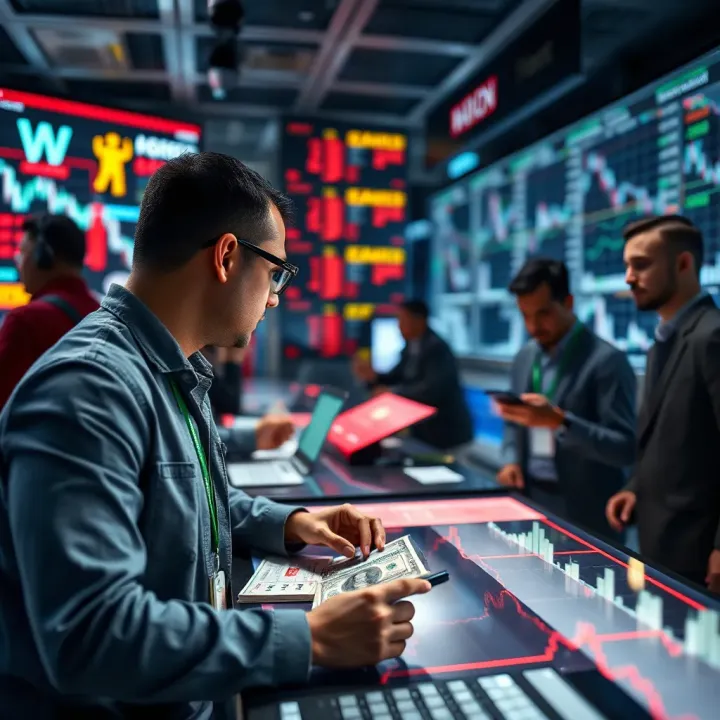
The forex market is dominated by large banks and financial institutions, but retail traders have grown to play a meaningful role thanks to online platforms. Banks trade huge volumes to manage risks and serve clients, while institutions like hedge funds and corporations manage currency exposure tied to global business. Retail traders, on the other hand, operate with smaller accounts but add valuable liquidity. Their activity can sometimes create short-term price swings.
Central banks hold a special spot in the market since their policies can significantly sway currency values. When the Federal Reserve announces a rate change or the European Central Bank signals monetary easing, it can shift market sentiment instantly. Central banks also intervene occasionally to stabilize or adjust their currencies, making their moves critical for traders to watch.
At its core, forex prices reflect supply and demand for currencies. When a country’s economy looks strong—say, with rising employment and steady growth—investors seek that currency, increasing demand and pushing prices up. Conversely, political instability or weak data lowers demand, causing the currency to fall.
Economic indicators like GDP, inflation rates, and unemployment figures play a major role in price swings. For example, a surprisingly strong U.S. jobs report often boosts the dollar because it hints at a healthy economy and possible rate hikes. On the flip side, adverse geopolitical news can spook markets and cause rapid drops.
Market sentiment, or the overall feeling among traders, adds another layer. Sentiment can drive prices beyond what fundamentals alone suggest. If traders collectively expect a currency to strengthen, they might buy in, propelling the price higher, even before actual economic data confirms it. This can lead to trends and sudden reversals, so staying tuned to sentiment is crucial.
The bottom line is that forex trading isn’t just about numbers—it’s about understanding the flow of money, psychology, and global events influencing the market every second.
Choosing the right trading platform matters a lot when you’re diving into forex trading. These platforms act like your cockpit—they give you control, information, and the tools you need to make quick decisions in a market that never sleeps. Different platforms offer various levels of complexity and features, so you want one that matches your experience and trading style without overwhelming you.
Look for platforms that offer a clean, intuitive interface and fast execution speeds. You don’t want to be stuck clicking through endless menus when the market is moving fast. Tools like customizable charts, real-time news feeds, and technical indicators make a huge difference in spotting opportunities. Also, check if the platform supports automated trading or signal alerts if you plan to use those features.
For example, many traders appreciate platforms with mobile apps that sync seamlessly to stay connected on the go. Security is another key factor—platforms should have two-factor authentication and reliable encryption to protect your account and personal info.
In the U.S., popular platforms include MetaTrader 4 (MT4) and MetaTrader 5 (MT5), which are well-established with a wide range of technical tools and a big user community. Another favorite is TradingView, known for its user-friendly interface and powerful charting options. Many brokers also offer proprietary platforms tailored to their service, like OANDA’s fxTrade or Forex.com’s platform, giving you options depending on your broker.
Leverage lets you control larger currency positions with a smaller amount of actual money in your account. For instance, with 50:1 leverage, you can trade $50,000 worth of currency with just $1,000. This can amplify your profits if the trade’s direction is correct. But here’s the catch—leverage works both ways. Losses are magnified just as much, so a small move against your position could wipe out your initial investment quickly.
Margin is the money you need to set aside to open and maintain your leveraged position. Brokers usually set margin requirements based on leverage—for example, a 2% margin for 50:1 leverage means you must keep $2,000 for every $100,000 you trade. Falling below this margin triggers a margin call, and the broker may close your trades automatically to prevent further losses.
Understanding your margin requirements and how leverage affects your risk ensures you don’t overextend. Many new traders underestimate this and lose money fast. Always size your trades carefully and be ready with stop-loss orders to control downside risk.
Knowing how to use trading platforms effectively, and respecting the power of leverage and margin, puts you one step ahead in the forex arena. Picking the right tools and managing your risks smartly can help you trade more confidently and sustainably.
Forex trading isn't just about picking pairs and hoping for the best. Having a solid trading strategy can make all the difference between winning trades and losing your shirt. Strategies help traders stay disciplined, manage risk, and make more informed decisions amid the market's ups and downs. Let’s break down some common approaches traders use to navigate this volatile field.
Charts are the bread and butter for technical traders. They provide a visual snapshot of price movements over time. Indicators like moving averages, Relative Strength Index (RSI), and MACD smooth out noise and reveal underlying momentum or potential reversal points. For example, a trader might spot a moving average crossover as a signal to buy or sell a currency pair. The key is using these tools to forecast price direction based on past patterns.
Recognizing price trends—whether up, down, or sideways—lets traders align their moves with the market's dominant direction. Beyond trends, specific chart patterns like head and shoulders, double tops, or flags can hint at future moves. For instance, spotting a 'double bottom' pattern could suggest a currency pair is about to bounce back up. These insights guide entry and exit points, helping traders avoid jumping in against the flow.
Currency values often react sharply to economic releases like employment numbers, GDP reports, or inflation rates. Traders who keep an eye on these reports understand which currencies may strengthen or weaken. For example, stronger-than-expected U.S. jobs data might boost the dollar versus other currencies. Monitoring central bank rate decisions also plays a major role since interest rate changes directly impact currency demand.
Political tensions, elections, or trade negotiations can rattle forex markets. A sudden announcement like a tariff imposition can send currencies swinging within minutes. Traders tracking headlines stay prepared to act fast. For example, uncertainty around Brexit negotiations frequently caused volatility in the British pound. Watching these events helps traders anticipate risk and avoid getting caught on the wrong foot.
No trader wins every time—that’s where stop-loss orders come in. They automatically close a position if the price moves too far against the trader, limiting losses. For example, if you buy EUR/USD at 1.1000, setting a stop-loss at 1.0950 caps your loss to 50 pips. This is crucial for protecting your trading capital and preventing emotional decisions when markets get wild.
Knowing how much to trade based on your account size is key to staying in the game. Position sizing means adjusting trade size so no single loss can cripple your portfolio. Diversification—trading different currency pairs or strategies—helps balance risk by not putting all your eggs in one basket. For instance, combining trades in USD/JPY and EUR/GBP spreads exposure across different economies and market drivers.
The bottom line is having solid strategies combined with disciplined risk management boosts your chances of success in forex trading.
This combination of technical insight, fundamental awareness, and careful risk control forms the backbone of most traders’ playbooks.
Understanding the potential benefits and risks of forex trading is essential for anyone stepping into this market. It’s not just about the chance to earn profits; you also need to know what pitfalls to avoid and how to manage risk effectively. This knowledge helps you make smarter trading decisions and avoid surprises that could wipe out your investment.
Forex trading stands out for its accessibility—anyone with an internet connection and a trading account can participate. Unlike stock markets that operate within specific hours, forex operates 24 hours a day across global financial centers. This means you can trade during your schedule, whether it’s early morning or late at night.
The forex market is also incredibly liquid. This means trades can be executed quickly and with minimal price changes even for large transactions. For instance, the EUR/USD pair is one of the most traded pairs worldwide. Its high liquidity keeps spreads tight, so you pay less in costs and can enter or exit trades faster.
Another benefit is the ability to profit whether currency prices go up or down. In forex, you can take a "long" position if you expect a currency to strengthen, or a "short" position if you believe it will weaken. For example, if you expect the U.S. dollar to weaken against the Euro due to interest rate decisions, you might short the USD/EUR pair. This flexibility gives traders more ways to capitalize on market moves than some other financial instruments.
Forex markets can change direction swiftly based on economic data releases, geopolitical events, or sudden news. This volatility means that prices can swing widely in short periods, which increases both potential gains and losses. For example, unexpected Federal Reserve announcements often cause sharp moves in the dollar's value. Without proper risk controls, sudden market swings can quickly erode your capital.
Leverage is a double-edged sword in forex. While it lets you control a large position with a smaller amount of money, it can amplify losses just as much as profits. Say you use 50:1 leverage; a 2% move against your position wipes out your initial investment. Many traders get caught off guard by leverage, leading to losses bigger than their account balance if they don’t set stop-loss orders.
The forex market is largely unregulated compared to stock exchanges. This means you must be cautious choosing brokers to avoid scams or unethical practices. Some brokers might offer ultra-high leverage or poor trade execution to lure inexperienced traders. Always trade with brokers registered with recognized bodies like the Commodity Futures Trading Commission (CFTC) or the National Futures Association (NFA) in the U.S.
Always remember: the ease of entering the forex market doesn’t guarantee success. Being aware of the market’s ups and downs and knowing how to manage your trades can save you significant headaches.
In summary, forex trading offers unmatched accessibility and the chance to benefit from nearly nonstop market action. Still, it carries risks tied mainly to volatility, leverage, and broker choice. Smart traders respect these risks, manage them wisely, and treat forex as a serious financial activity requiring discipline and ongoing learning.
📈 Learn how forex trading works in Kenya, covering currencies, trading platforms, analysis, risks & tips to trade confidently in the dynamic forex market.
📈 Learn how forex trading works in Kenya with this practical guide. Understand currency markets, trading platforms, exchange rate factors, risks, and regulations to trade confidently.
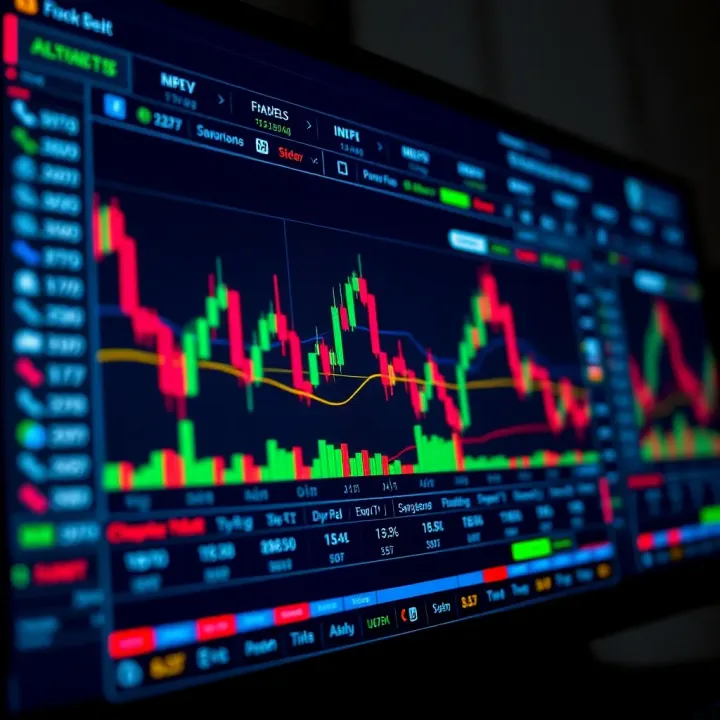
Discover how forex trading works in Kenya 🇰🇪 with insights on market basics, regulations, brokers, strategies, risks, and tools tailored for Kenyan traders.
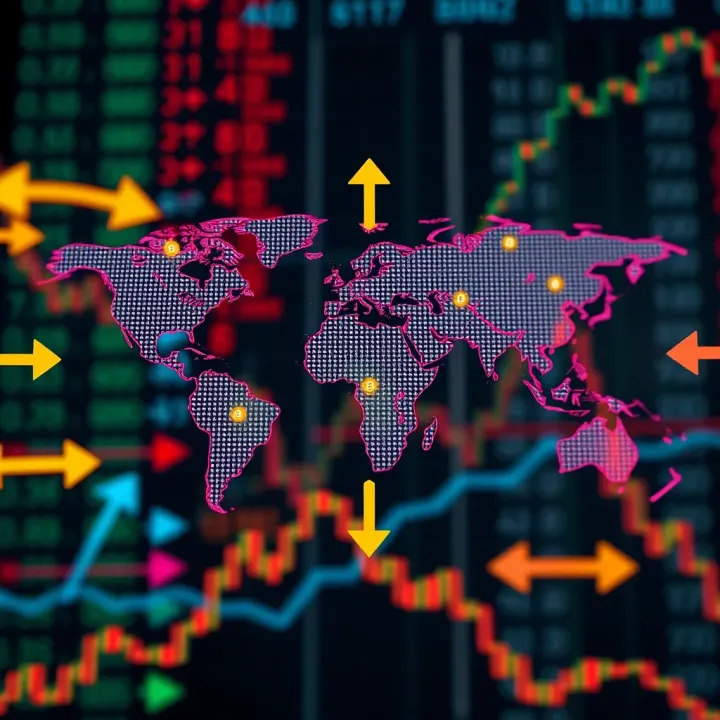
📈 Get a clear grasp of forex trading basics—currency market functions, key terms, strategies, plus tips on risk management & account setup for Kenyan traders.
Based on 6 reviews