
Understanding Forex Trading: A Practical Guide
💱 Master forex trading with DuniaAndroid.com! Learn market basics, key terms, effective strategies, risk control, and how technology transforms trading today.
Edited By
Emily Foster
Forex trading robots, often called expert advisors (EAs) or automated trading systems, have reshaped how many traders approach the currency markets. These computer programs place trades automatically based on predefined strategies, cutting down the manual work and emotional decision-making common in forex trading.
At their core, forex robots scan live market data and execute buy or sell orders without needing human intervention. Imagine you're trying to catch price movements around the clock—the robot stays alert 24/7 without getting tired or distracted. For example, a robot might monitor EUR/USD and trigger trades whenever the price crosses a moving average, based on rules set by its creator.
While these systems sound like a shortcut for profits, they’re not foolproof. Automation doesn’t guarantee success. Robots follow their programming rigidly and can’t adjust if market conditions shift rapidly or unpredictably. That's why understanding their mechanics and limits is key before plugging one into your trading plan.
Automated trading is designed to save time and remove emotion from trading, but strategic oversight remains essential for managing risks effectively.
Speed: They process market data and execute trades much faster than manual trading.
Consistency: Robots stick to their set rules without hesitation or fear.
Backtesting: Users can test strategies against historical data to spot weaknesses before going live.
However, drawbacks exist:
Lack of Adaptability: Robots can't interpret news or unexpected market spikes.
Over-optimization: Some systems perform well on past data but fail in real conditions.
Technical Risks: Glitches, connectivity issues, or incorrect settings can cause losses.
In practice, traders who couple robots with regular monitoring and risk management tend to fare better. If you’re looking at forex robots, keep an eye on strategy transparency, credible user reviews, and the ability to pause or adjust the robot manually.
Understanding how these tools work—including their strengths and weaknesses—lets you make smarter choices about whether and how to include them in your trading toolkit.
Understanding how forex trading robots function is key to deciding if they're a good match for your trading style. These automated tools operate based on predefined rules and market data, removing much of the guesswork and emotional swings that can trip up even seasoned traders. By breaking down their core components, you get a clear picture of their strengths and limitations.
Rule-based trade execution is the backbone of forex robots. Instead of responding to gut feelings or news headlines, these robots follow specific rules set by algorithms to decide when to buy or sell currencies. For instance, a robot might be programmed to automatically enter a trade when the moving average of the EUR/USD pair crosses a certain threshold. This removes human hesitation and ensures timely reactions to market signals.
Technical indicators integration involves robots utilizing tools like RSI, Bollinger Bands, or MACD to make trading decisions. These indicators help assess market momentum, volatility, and trends. Imagine a robot that places trades only when the RSI indicates an oversold condition, aiming to buy low and sell high. Technical indicators provide a quantitative basis that helps these systems function consistently.
Market condition scanning means robots continuously analyze market environments to identify optimal trading opportunities. They keep an eye on multiple currency pairs, different time frames, and economic factors simultaneously. For example, a system might pause trading during high volatility events like unexpected Federal Reserve announcements, protecting your account from erratic swings.
Fully automated systems handle everything—from analyzing market data to executing and closing trades—without needing your input. These are like autopilot modes for trading. Imagine a robot who handles your daily trading in the USD/JPY market, freeing you to focus on other priorities. However, since they run nonstop, it’s important to monitor performance regularly.
Semi-automated tools assist by generating trade suggestions, but you decide whether to act. Think of them as your trading coach, offering signals that you can accept or decline. This type works well if you want some hands-on control but still benefit from algorithmic insights.
Signal providers differ because they don’t trade directly for you. Instead, they send alerts based on their algorithms for currencies to watch. You can plug these signals into your trading platform or interpret them yourself. Signal providers are a good fit when you want external trade ideas without full automation.
The bottom line is that understanding these workings helps you pick a robot that fits your trading habits, risk tolerance, and time availability. Every model offers distinct pros and cons, so matching them with your goals is crucial.
Forex trading robots offer several practical advantages that can enhance a trader's performance and ease the challenges of constant market monitoring. These automated tools provide speed, efficiency, and consistency that humans find tough to match, especially in a market that operates around the clock.
Eliminating emotional bias is a key benefit of forex trading robots. Human traders often struggle with fear, greed, or hesitation, causing missed opportunities or rash decisions. For instance, during volatile market swings, a trader might panic and exit a position prematurely. Robots, in contrast, stick strictly to predefined rules and algorithms, executing trades without emotion. This can lead to more disciplined, consistent trading results.
When emotions cloud judgment, it's easy to second-guess or delay trades. Robots remove this human flaw by following precise entry and exit signals, which helps maintain strategy integrity across different market conditions.
Faster reaction to market changes is another crucial aspect. Forex markets move swiftly, and even a few seconds can make a difference. For example, if a major economic report drops suddenly, a well-programmed robot can instantly recognize the change and execute trades within milliseconds. This speed can be the edge that human traders miss due to slower reaction times.
Automation allows trades to happen at optimal moments, capturing short-lived opportunities. Unlike manual trading, robots don't require a break or second thoughts, so they can respond to price shifts or technical signals instantly.
Continuous trading without fatigue is a significant strength of robots. Forex markets run 24 hours a day from Monday to Friday, which makes it tough for any trader to watch the market continuously. Trading robots operate nonstop during these hours without the need for rest, helping ensure that no potential trades are missed just because the human trader is asleep or distracted.
This nonstop vigilance is especially useful for strategies that rely on specific market triggers that can happen at any time. For instance, a news release affecting currency pairs at 2 AM ET won't slip past an automated system.
Opportunity capture irrespective of time zones also makes robots valuable. Traders located outside major financial centers can find it inconvenient to trade during active market hours like the London or New York sessions. Robots bridge this gap by executing trades regardless of a trader’s local time. For example, someone based on the West Coast can rely on a robot to manage trades during London’s active morning session without staying up late.
This constant presence helps maintain positions aligned with strategy rules, preventing missed profits or late reactions due to time differences.
Automated forex trading tools can complement human strategies by providing speed and consistency, making them especially beneficial for active traders and investors who can't monitor markets constantly.
In summary, trading robots boost forex trading by removing emotional hurdles, executing trades faster than humans, monitoring markets nonstop, and bridging time-zone limitations. These benefits combine to offer traders a reliable, efficient way to stay in the game regardless of human limitations.
Automated forex trading offers speed and convenience, but it's not without its pitfalls. Understanding the limitations and risks associated with forex robots is critical before investing. These systems depend heavily on algorithms designed for specific market patterns, which means they can struggle when markets don't behave as expected. Knowing these risks helps traders set realistic expectations and manage their capital wisely.
Curve fitting issue: One common problem is curve fitting. This happens when a forex robot is overly tailored to past market data, making it perform impressively in backtests but poorly in real trading. Imagine a robot that adjusts its trading thresholds to fit exactly every twist and turn in ten years of historical charts. While it looks perfect on paper, it likely won't handle future market quirks. This overfitting limits the robot's ability to generalize and adapt.
Performance drop in live markets: Related to curve fitting is the performance drop once the robot hits live markets. Market conditions constantly shift due to news, economic changes, or unexpected events. A robot locked into past data patterns can spout false signals or get stuck in losing streaks. For instance, a flash crash or sudden policy announcement can confuse an algorithm that wasn't designed to react beyond its programmed scenarios. Traders often notice that robots that wowed them in testing struggle when trading live.
Limited adaptability to sudden changes: Forex robots function well under steady conditions but falter when sudden market shifts occur. For example, during geopolitical upheaval or major economic releases, volatility spikes beyond normal ranges. Many robots fail to recalibrate their strategies fast, resulting in missed opportunities or losses. This rigidity means traders should never rely solely on automation, especially during sensitive trading windows.
Risk of unexpected drawdowns: Even with safeguards, forex robots can trigger sharp losses, known as drawdowns. Unexpected drawdowns occur when the robot keeps opening losing positions, often because the algorithm misreads volatile trends as normal moves. A vivid example is a news-driven gap opening where the price suddenly leaps far beyond stop losses, draining account value rapidly. Such drawdowns highlight the need for active risk management, including realistic stop-loss settings and capital allocation.
The bottom line is that while forex robots can assist trading, they’re not fail-proof. Recognizing these risks helps traders use robots more effectively without exposing themselves to avoidable shocks.
Choosing the right forex trading robot can make or break your automated trading experience. Not every bot suits every trader or market condition. Its essential to weigh performance, reliability, cost, and ongoing support before committing your funds. A solid selection helps reduce risks from poorly designed algorithms or unreliable service, letting you focus on refining your overall forex strategy.
Backtesting results analysis offers a snapshot of how a forex robot might have handled historical market conditions. This testing involves running the robot against past price data to see its profit potential and drawdowns. For example, a robot that consistently made small profits but avoided heavy losses during volatile periods signals a more stable strategy. However, harsh reliance on backtesting can mislead if the robot overfits to past trends that no longer exist.
Live trading history review provides a practical measure of how the robot performs in real market settings. This data shows actual trade executions, slippage encountered, and how it reacts to changing volatility or news events. Many brokers and robot providers share verified track records. Look for consistency over at least several months and on different currency pairs. For instance, if a robot touted as a EUR/USD specialist delivers steady gains on other pairs, that versatility can be a plus.
When it comes to one-time payment versus subscription, think about your trading horizon and updates. One-time fees might seem cheaper upfront but could lack ongoing improvements or new features. Subscriptions often include regular updates to keep pace with market changes, plus customer support. A robot charging $200 upfront with no updates might fall behind, while $30/month giving continuous service may be better value.
Access to updates and customer service can save you headaches and money long term. Markets evolve, and so should your software. Responsive customer support helps troubleshoot issues fast, reducing downtime and losses. For example, some service providers offer live chat support, community forums, or thorough documentation. If a robot developer vanishes after the sale, you might be stuck with outdated software that can’t adjust to fresh market triggers.
Picking the right forex robot means balancing measurable factors—performance backed by solid data—and qualitative ones like support and cost. The best choice aligns with your trading goals and comfort with automation.
By focusing on these aspects, you ensure that your trading robot is not just a black box but a reliable part of your forex toolkit.
Using forex trading robots without a solid strategy can backfire. Following best practices offers a way to get the most out of these automated tools while managing risks. Let’s dig into some key methods that help keep your trades smart and your losses in check.
Setting realistic stop-loss limits is a cornerstone of any trading approach. Even with robots executing trades, you need to control how much you’re willing to lose on any position. For example, if a forex robot opens a trade on EUR/USD, setting a stop-loss at a level that limits loss to, say, 1% of your account balance keeps your exposure manageable. If the market suddenly moves against you, the stop-loss kicks in automatically to prevent a much bigger hit.
Many new traders overlook this and end up wiping out significant parts of their accounts before intervening. Stop-loss limits aren’t about avoiding losses entirely—that’s impossible—but about protecting your capital so you can trade another day.
Avoiding over-leveraging is another critical point. Leverage magnifies both gains and losses, and robots can execute leveraged trades very quickly. Using 50:1 leverage might sound tempting for big gains, but it increases the risk of a margin call or massive loss in volatile markets. A safer approach is to limit leverage to a level appropriate for your experience and risk tolerance, often 10:1 or lower for robot-assisted trading.
Traders sometimes get carried away, using the robot to open multiple leveraged positions at once. This practice can burn through an account fast if the market moves unexpectedly.
Regular performance monitoring is a must. Even the most well-coded forex robots don’t guarantee profits indefinitely. Market conditions shift, so what worked a month ago may falter today. Checking daily or weekly reports shows you how the robot performs under current conditions and alerts you to any technical glitches.
For instance, if you notice the robot suddenly starts losing more trades or performance stats dip sharply, it’s time to dig deeper or pause trading. This vigilance prevents small issues from turning into costly disasters.
Adjusting strategies based on market feedback means you’re not leaving the robot on autopilot forever. Suppose your robot runs a strategy optimized for trending markets. If the market shifts to sideways or choppy conditions, the same strategy may underperform. You’ll need to tweak settings or choose a different setup that fits better.
This human input keeps automation flexible. Combining machine speed with human judgment greatly improves outcomes. And remember, the goal isn’t to replace traders but to supplement strategies with efficient trade execution.
Bottom line: Automation can boost your forex trading but works best when paired with sound risk controls and active management. Balancing robots with human oversight gives you the control and flexibility necessary to navigate ever-changing currency markets.
💱 Master forex trading with DuniaAndroid.com! Learn market basics, key terms, effective strategies, risk control, and how technology transforms trading today.
Learn forex trading in Kenya 🇰🇪 with our practical guide covering market basics, strategies, risk management, choosing brokers, and trading tools 📈
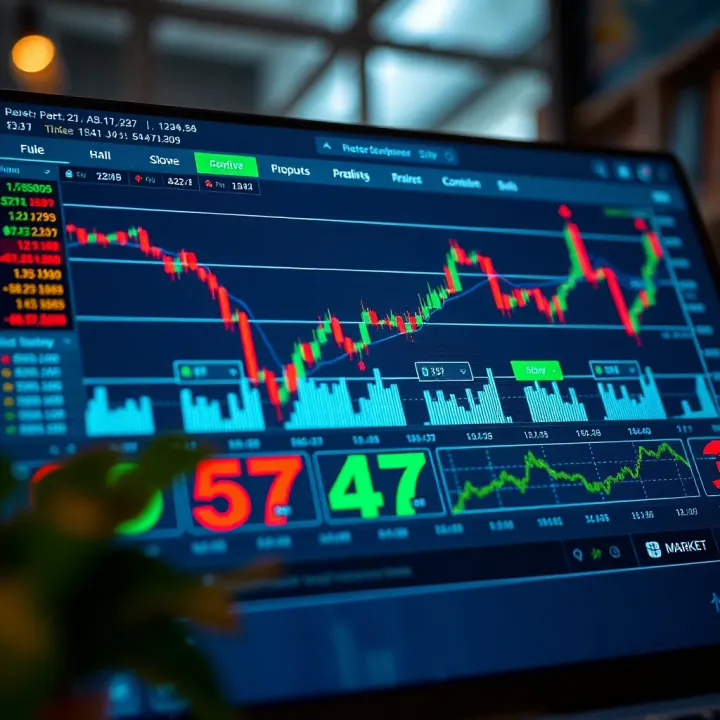
📈 Start Forex trading confidently in Kenya with this straightforward guide. Learn essential terms, manage risks well, and use trusted local platforms effectively.
🌍 Learn how forex trading works in Kenya, discover local regulations, manage risks, and find trusted platforms for wise trading with tips tailored for Kenyan traders.
Based on 15 reviews