
Forex Trading Basics Explained
📈 Get a clear grasp of forex trading basics—currency market functions, key terms, strategies, plus tips on risk management & account setup for Kenyan traders.
Edited By
Oliver Reed
Forex trading, also known as foreign exchange trading, involves buying and selling currencies with the goal of making a profit. It’s the largest financial market worldwide, with over $6 trillion traded daily. Traders expect to benefit from fluctuations in currency values, which are affected by economic indicators, geopolitical events, and market sentiment.
At its core, forex trading is about currency pairs—for instance, EUR/USD shows how many U.S. dollars it takes to buy one euro. If you believe the euro will strengthen against the dollar, you’d buy EUR/USD. If you think the euro will weaken, you’d sell that pair.
The forex market operates 24 hours a day during weekdays, opening in Sydney and closing in New York, allowing traders to react instantly to global events without waiting for a local stock exchange to open.
Key participants include banks, hedge funds, multinational companies, governments, as well as retail traders. While big players dominate the market, technology gives individual traders access through online platforms, putting them on a more level playing field.
Here are some essentials to get started:
Currency pairs: Major pairs (EUR/USD, USD/JPY), minors, and exotics.
Leverage: Borrowing to increase exposure, which can magnify profits or losses.
Spreads and fees: The difference between buying and selling price often represents the cost of trading.
Market orders vs Limit orders: How you choose to enter or exit trades.
Understanding these basics helps you make informed choices instead of blindly following tips or trends. Real-world examples, like reacting to a sudden interest rate change or political instability, show how forex moves and why timing matters.
The bottom line is this market offers great opportunities but comes with risks that require clear knowledge and solid risk management strategies to navigate successfully.
Forex trading, often called currency trading, involves buying and selling currencies to make a profit or hedge risks. It’s the world’s largest financial market, with a daily turnover exceeding $6 trillion. For investors and finance pros, understanding what forex trading means helps make informed decisions, whether managing international business exposures or speculating on price moves.
Foreign exchange refers to converting one currency into another. For example, when an American tourist travels to Europe, they exchange US dollars (USD) for euros (EUR) to pay for goods and services. This everyday activity drives demand and supply in currency markets, affecting the relative value of currencies.
Currencies are traded in pairs, such as EUR/USD or USD/JPY. The pair shows how much of the second currency one unit of the first currency can buy. If EUR/USD quotes 1.10, it means one euro buys 1.10 US dollars. This pairing system makes it easier to compare currencies against each other, allowing traders to speculate on which currency will strengthen or weaken.
Exchange rates indicate the price of one currency in terms of another and fluctuate based on economic factors like interest rates, inflation, and political events. For businesses importing goods, a weaker domestic currency means higher costs; for exporters, it can boost competitiveness. Traders watch exchange rates closely to spot opportunities or protect against unfavorable movements.
Various players trade currencies: multinational corporations, banks, hedge funds, governments, and individual investors. Corporations often trade to settle international deals or hedge currency risk. Investors and speculators try to profit from exchange rate changes. For instance, a fund might buy the British pound expecting it will rise against the US dollar.
Market makers are banks or firms that provide liquidity by continuously buying and selling currencies. Retail traders are individual investors venturing into forex through online platforms. Institutions, like pension funds or central banks, execute large trades that influence market direction. Each group contributes to the overall depth and efficiency of the market.
Forex trading affects trade balances, inflation, and interest rates worldwide. When a country's currency weakens dramatically, imports become costly, pushing inflation up. Central banks monitor forex markets to adjust monetary policy accordingly. Ultimately, the forex market connects economies, making it a key component of global financial stability.
The bottom line is understanding forex trading means recognizing its role in global commerce, investment strategies, and economic policy decisions.
Understanding how the forex market operates is essential for trading success. It’s not just about watching currency prices move but knowing what drives those changes and when to trade. This section breaks down the market’s structure, key trading sessions, and how prices are determined, so you can approach trading with solid ground.
The forex market is primarily over-the-counter (OTC), meaning there's no central exchange like the New York Stock Exchange. Instead, trades happen directly between parties, usually through electronic networks connecting banks, brokers, and individual traders. This setup allows trading 24 hours a day, five days a week, without a central location.
Because of its OTC nature, the market is highly decentralized. This means prices can vary slightly from one broker to another, but overall liquidity is maintained by major players like banks and financial institutions. For you, this implies faster executions but also the need to pick trustworthy platforms that provide competitive pricing.
Major trading centers, spread across different time zones, keep the market active around the clock. London, New York, Tokyo, and Sydney each represent significant sessions. For example, London overlaps with New York for a few hours daily, creating one of the most liquid trading periods. Knowing these sessions helps you catch peak market activity and plan trades accordingly.
Liquidity refers to how easily currencies can be bought or sold without affecting their price much. Forex boasts massive volume daily — over $6 trillion globally — which means you can generally enter or exit a trade swiftly. High liquidity also means tighter spreads and less slippage, both saving you money during trading. Keep in mind, lower liquidity times usually happen late in the session or during holidays, which can lead to unusual price swings.
Every currency pair has bid and ask prices. The bid is the price buyers are willing to pay, while the ask is what sellers want. Think of it as a garage sale: the bid is the offer price from buyers, and the ask is the seller's price. Understanding this helps you know how trades execute and where your costs come in.
The difference between bid and ask prices is called the spread. It’s essentially a hidden fee you pay every time you trade. Spreads vary with currency pairs; major pairs like EUR/USD have very tight spreads, often just a few pips, while exotic pairs might have wider spreads. Traders should watch spreads closely because high spreads eat into profits, especially for short-term strategies.
Economic indicators — like employment reports, inflation numbers, and GDP figures — play a big role in shifting currency prices. For instance, a stronger-than-expected U.S. jobs report can boost the dollar’s value as investors anticipate higher interest rates. Traders often use these indicators to guess future market moves, making it wise to keep an eye on economic calendars announced by institutions such as the Federal Reserve and Bureau of Labor Statistics.
Getting familiar with market structure and price basics gives you the advantage of trading smarter, not just guessing. Timing your trades during active sessions and understanding price movements can help you minimize costs and maximize opportunities.
OTC markets operate without a centralized exchange, offering continuous trading.
London, New York, Tokyo, and Sydney sessions shape currency activity by timezone.
Bid-ask spreads are the practical cost of trading; tight spreads are preferable.
Economic reports impact currency rates by shaping investors’ expectations.
With this foundation, you’re better equipped to tackle forex trading intelligently and respond to market conditions with confidence.
Understanding common trading strategies and techniques is essential for anyone serious about forex trading. These approaches provide a framework to analyze the market, make informed decisions, and manage risk effectively. By combining different methods, traders can tailor strategies that fit their style and goals.
Economic data and news impact plays a big role in shaping currency values. Reports like U.S. job numbers, inflation rates, and GDP growth often cause immediate moves in the forex market. For instance, a stronger-than-expected jobs report can boost the U.S. dollar as traders anticipate tighter Federal Reserve policies. Being aware of key economic announcements helps traders avoid surprises or capitalize on volatility.
Interest rates and central bank policies also heavily influence forex prices. When the Federal Reserve raises interest rates, it usually strengthens the dollar because higher yields attract investment. Conversely, a dovish stance may weaken it. For example, if the European Central Bank signals a delay in hiking rates, the euro might decline. Tracking central bank meetings and statements is critical to understanding long-term currency trends.
Geopolitical events inject uncertainty and can shake the forex market significantly. Political instability, trade disputes, or conflicts often trigger swift currency moves. Take the trade tensions between the U.S. and China—they have regularly caused spikes in safe-haven currencies like the Japanese yen or Swiss franc. Traders need to stay alert to global developments, as these events can disrupt usual market patterns and create trading opportunities.
Charts and price patterns reveal how markets behave historically, providing clues for future movements. Common patterns like head and shoulders, double tops, or triangles signal potential reversals or continuations. For example, spotting a breakout from a triangle pattern might indicate an upcoming strong price move. Traders use charts to spot entry and exit points based on these visual cues.
Indicators and oscillators add another layer by quantifying market momentum, strength, or overbought/oversold conditions. Tools like the Relative Strength Index (RSI), Moving Average Convergence Divergence (MACD), or Bollinger Bands help traders gauge when prices may reverse or trend. For example, an RSI reading above 70 might warn that a currency pair is overbought and due for a pullback.
Using trends to guide decisions is a cornerstone of forex trading. Identifying whether the market is in an uptrend, downtrend, or sideways helps avoid false signals. When a currency pair consistently makes higher highs and higher lows, it’s best to look for buying opportunities. Conversely, in downtrends, selling on rallies tends to work better. Following trends cuts down noise and increases the chance of profitable trades.
Setting stop losses and take profits limits potential losses and locks in gains. For example, placing a stop loss 50 pips below the entry price protects your account if the trade goes wrong. Meanwhile, setting a take profit at a reasonable target secures earnings without greed. Using these tools prevents emotions from clouding judgment.
Position sizing ensures you never risk too much on a single trade. Instead of guessing, you calculate the dollar amount you’re willing to lose—say 1% of your account—and adjust trade size accordingly. This approach helps survive losing streaks and keeps your capital intact over time.
Managing leverage is crucial because it magnifies gains but also losses. While 50:1 leverage might sound tempting, it can quickly drain an account if you’re not careful. Many beginner traders overuse leverage, leading to big losses. Conservative use of leverage preserves your trading longevity.
Mastering these strategies and techniques not only improves your ability to read the market but also protects your hard-earned money. It’s the difference between reckless gambling and smart trading.
Forex trading offers opportunities, but it also carries risks that every trader must handle carefully. Understanding these challenges protects your investment and helps you trade smarter.
Sudden price swings are common in forex markets due to the constant flow of information and the actions of big players like banks and governments. For example, after a surprise interest rate announcement, the value of a currency can jump or drop sharply within minutes. This unpredictability means traders need to be ready to react quickly or risk big losses.
Impact of unexpected news often causes sudden market moves. Imagine a geopolitical crisis flaring up or an unexpected unemployment report. Prices can move in ways that no chart or model anticipated. These events make it tough to predict moves accurately, so staying updated on news and having a plan to handle surprises is vital.
Market gaps happen when prices open at a different level than the previous close, often due to events during market downtime—like over a weekend. For instance, a weekend political shock can cause a currency to gap dramatically at Monday’s open. These gaps can bypass stop-loss orders, leaving traders exposed to bigger risks.
Amplifying gains and losses is what leverage does—it lets you control a larger position with a smaller investment. Say you use 50:1 leverage; a 2% move in your favor doubles your money, but the same move against you wipes out a large portion of your capital. This makes leverage a double-edged sword.
Margin requirements are the amount of money you need to have in your account to open or maintain trades. Brokers might require different margins depending on the currency pairs or market conditions. Falling below this margin can trigger automatic closures of positions, so monitoring your margin level protects you from sudden liquidation.
Potential for rapid account depletion exists because losses can accumulate quickly when leveraged trades go bad. A few bad trades in a row can erase your capital if you're not careful with sizing and stop losses. This risk means you need strict discipline and a solid risk management plan to avoid wiping out your account.
Overtrading means taking too many trades, often driven by impatience or chasing losses. This usually leads to mistakes and increased commissions or spreads costs. For instance, a trader might jump at every minor price move, ignoring quality setups, which reduces overall profitability.
Ignoring risk management is a costly error. Skipping stop losses or risking too much on a single trade can lead to outsized losses. A good rule is to risk only a small percentage of your account per trade—this keeps losses manageable and the trading plan sustainable.
Emotional decision-making can sabotage even a solid strategy. Fear and greed might push you to exit early or hold losing trades hoping for a reversal. Maintaining a calm mindset and sticking to your plan helps avoid impulsive moves that can hurt your trading performance.
The bottom line is, forex trading requires respect for market risks. Preparing for volatility, managing leverage wisely, and avoiding common mistakes make a real difference in long-term success.
Getting started with forex trading means setting up a strong foundation before you dive into the market. It’s the step where you pick the right broker, understand how to open an account, and begin building your skills. Without this groundwork, even the most promising strategies can fall flat. A good start not only protects your money but also boosts your chances for steady success.
Regulation and licensing are what separate trustworthy brokers from the fly-by-night. Regulated brokers operate under strict rules from financial authorities like the Commodity Futures Trading Commission (CFTC) or the National Futures Association (NFA). This oversight helps keep your funds safer and ensures fair play. For example, brokers registered with the SEC must follow investor protection rules, which means you face less risk of fraud.
When it comes to trading platforms offered, different brokers provide various software options like MetaTrader 4, MetaTrader 5, or proprietary platforms. The choice affects your trading experience — some platforms offer more advanced charting, automated trading, or better mobile access. If you plan to trade on the go, look for a platform with a responsive app.
Spreads, fees, and customer support also matter a lot. Spreads—the difference between the bid and ask prices—can eat into profits, so lower spreads are usually better, especially for short-term traders. Add to that any commissions or withdrawal fees, and costs can add up quickly. On top of that, reliable customer support makes a real difference when you hit a snag or need quick answers.
Many brokers offer demo accounts and practice trading, which are essential for beginners. Demo accounts let you trade with fake money in real market conditions, helping you test strategies without risking your cash. Even experienced traders often use demos to try out a new strategy before going live.
There are different account types and minimum deposits to consider. Some brokers require just $100 or less to start, while others set higher thresholds. Account types vary too—standard accounts usually suit most traders, but there are micro or VIP accounts tailored to different trading volumes. Picking according to your budget and goals can save headaches later.
Verification and funding options can slow you down if you’re not prepared. Most brokers require ID verification like a driver’s license or passport for security and compliance. When it comes to funding, look for convenient methods like bank transfers, credit cards, or e-wallets such as PayPal or Skrill. Some brokers process funds instantly, while others might take a couple of days.
To succeed, you need ongoing education. Good brokers offer educational resources and courses ranging from articles and videos to live webinars. This helps traders stay sharp and adapt to ever-changing market conditions. For instance, some platforms provide daily market summaries that highlight key economic news affecting currency pairs.
Analyzing trades and journaling keeps you accountable and supports continuous improvement. Writing down what worked, what didn’t, and why helps you spot patterns in your behavior and strategy effectiveness. The journal becomes a personalized guide to avoid repeating mistakes.
Finally, staying updated on market news is critical. The forex market reacts instantly to economic releases like jobs reports, Fed announcements, and geopolitical events. Tools like economic calendars and news feeds from Bloomberg or Reuters keep you informed so you’re not blindsided.
The bottom line is, starting right sets the tone for your entire trading journey. Choosing a solid broker, opening the appropriate account, and nurturing your skills with good resources and habits puts you on a path where success is more than just luck.
📈 Get a clear grasp of forex trading basics—currency market functions, key terms, strategies, plus tips on risk management & account setup for Kenyan traders.
💱 Understand forex trading basics, how global currency markets work, risks, benefits & tips for Kenyan investors ready to explore this forex opportunity.📈
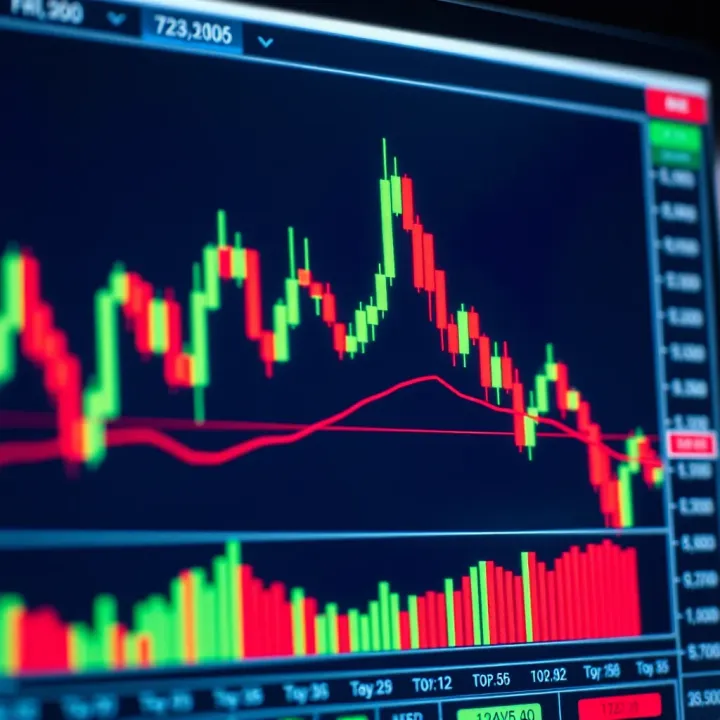
📊 Master forex trading charts to spot price shifts, trends, and opportunities. Learn how chart analysis guides smarter trades and better risk control in forex.
📈 Discover how forex trading works for Kenyan investors, learn local regulations, trading platforms, risks, and strategies to grow your portfolio with confidence 🇰🇪
Based on 6 reviews