
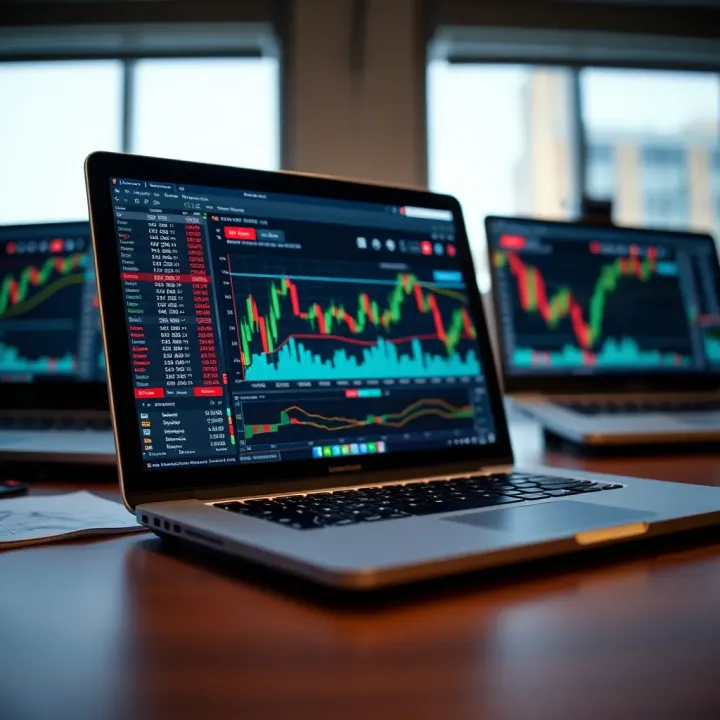
Forex Trading Brokers in Kenya: Complete Guide
🌍 Explore top forex brokers in Kenya, learn how to pick the right one, understand regulations, platforms, payment methods, and avoid trading traps.
Edited By
Elizabeth Montague
Forex trading, often called currency trading, is the buying and selling of currencies on the global foreign exchange market. Traders aim to profit from changes in exchange rates between currencies like the US dollar, euro, or Kenyan shilling. This market operates 24 hours daily, allowing participants worldwide to trade anytime, but its continuous nature also means market conditions can shift quickly.
Unlike the stock market, forex has no central exchange. Trades happen electronically over-the-counter (OTC), mainly through brokers or banks. Imagine it as a global bazaar where everyone from big banks, multinational corporations, central banks, to individual traders in Nairobi can participate.

Key players include:
Commercial banks: Move large sums for clients and speculators.
Central banks: Influence currency value through monetary policies.
Multinational companies: Exchange currencies to pay for goods and services.
Retail traders: Individuals who buy and sell using online platforms.
For example, a Kenyan importer ordering goods from the US would need US dollars. If the shilling weakens against the dollar, the importer pays more. A forex trader might speculate on such movements to earn a profit, buying shillings before a rise in value or selling before a drop.
Forex trading offers opportunities but also carries significant risk, especially due to leverage that can amplify both gains and losses.
Understanding basic terms helps when starting out. The currency pair — like USD/KES — shows how much one unit of the first currency costs in the second. The ‘bid’ is the price a buyer offers; the ‘ask’ is the price a seller wants. The difference, called the spread, is the broker's fee.
Practical trading involves choosing a reputable broker, analysing market trends, and setting risk limits. In Kenya, platforms like MT4 or local brokerage services combined with mobile money options enable easy access.
This overview sets the foundation to grasp how the forex market functions and what to expect. Subsequent sections will explore trading strategies, risk management, and Kenyan market specifics to help you make informed decisions.
Understanding what forex trading means is the first step in navigating the global currency market. It involves the buying and selling of foreign currencies with the aim of making a profit from fluctuations in exchange rates. This activity is particularly relevant for investors and traders who want to diversify their portfolio or hedge against currency risks in international business.
At its core, forex trading is about exchanging one currency for another. Consider a Kenyan importer who needs to pay suppliers in Euros; they will exchange Kenyan shillings for Euros at the current market rate. The actual rates fluctuate continuously due to supply and demand, geopolitical events, and economic indicators.
Trading currencies means speculating on these rate changes. For example, if a trader believes the US dollar will strengthen against the euro, they might buy USD/EUR currency pairs to profit when the dollar’s value rises.
Many participants trade forex to profit from these rate movements. Others use it for hedging. For instance, a Kenyan business operating in Tanzania might hedge against the Tanzanian shilling’s volatility to protect its earnings. Forex also allows investors to diversify their portfolio beyond equities or bonds.
Besides businesses and investors, individual traders also enter the forex market aiming for short-term gains by exploiting price swings. The high liquidity and 24-hour nature of the forex market make it attractive for active traders.
The forex market functions 24 hours a day during weekdays, spreading across four major financial centres: Sydney, Tokyo, London, and New York. This means trading never really stops, making it possible for Kenyans to trade at convenient hours.
This global reach also means that no single market controls forex prices. Instead, currency values respond to worldwide news, economic data, and political developments, giving traders constant information to react to.
Forex trading always involves two currencies, known as a currency pair. For example, USD/KES shows how many Kenyan shillings one US dollar can buy. Traders don't buy currencies alone; they trade one against another.
Each currency in the pair is classified as either the base currency or the quote currency. If you buy USD/KES, you are buying dollars and selling Kenyan shillings. Understanding this is central to grasping profits or losses.
The spot market deals with immediate currency exchange based on current prices, settling usually within two business days. This is where most forex trading happens, as it reflects real-time supply and demand.
In contrast, futures contracts set a currency exchange at a specific price on a future date. These are often used by companies or investors wishing to lock in costs or protect against adverse movements. While futures can offer pricing certainty, they involve commitments beyond the immediate trade.
Forex trading combines global economic factors with real-time market decisions, making it an engaging yet complex activity that requires understanding the basics before getting involved.
Understanding who participates in the forex market is vital because their actions directly influence currency values and trading opportunities. The market comprises several key players, each bringing different motivations and impacts. Here's a breakdown to help you see where you fit and how the market moves.
Central banks and governments are heavyweight players in forex trading. They control national monetary policies and use currency markets to stabilise their economies. For example, the Central Bank of Kenya (CBK) might intervene to prevent the Kenyan shilling from dropping too sharply against the US dollar, protecting local traders and importers from volatile exchange rates. When central banks adjust interest rates or engage in currency interventions, they affect liquidity and market trends, creating opportunities but also risks for traders.
Central banks act like the market's 'fundi'—maintaining balance, but their moves can cause sudden shifts in currency prices.
These are the workhorses of the forex market, handling large volumes of currency trades daily. Major banks like KCB, Standard Chartered Kenya, or Barclays provide forex services for corporations and individuals alike. Through their trading desks, they buy and sell currencies to supply foreign exchange, manage risks, and facilitate international trade. Their tight spreads and high-volume trades often determine the bid and ask prices you see on trading platforms. Financial institutions also offer forex trading services to clients, shaping market liquidity and access.
Individual traders, including retail investors, have grown hugely active thanks to online platforms available in Kenya, such as HotForex or XM. They participate for profit, bank on speculation, or hedge against currency risks. While smaller in trade volume, individual traders influence market sentiment, especially during volatile periods. Beginners should be aware that unlike big institutions, individuals face tighter spreads and higher risks, making risk management critical.
By understanding these actors, you get a clearer view of market dynamics. Whether you are opening your first forex trade or managing portfolio risks, recognising the motives and effects of these key participants helps sharpen your trading decisions.
Forex trading today happens mostly online, making it accessible for many Kenyans interested in the currency markets. Understanding this practical aspect clarifies how the theoretical concepts you've learned translate into real activities. Tools and platforms enable traders to enter and exit trades quickly, with a range of options tailored for different experience levels.
Many Kenyan traders use popular forex platforms like MetaTrader 4 (MT4), MetaTrader 5 (MT5), and cTrader. These platforms provide real-time price charts, news feeds, and analytical tools. For instance, MT4 remains widely favoured for its user-friendly interface and automated trading through Expert Advisors (EAs), which help repeat profitable strategies without constant oversight.
Choosing the right platform depends on your trading style and needs. Some platforms offer direct integration with payment methods like M-Pesa, easing deposit and withdrawal processes—this has made forex trading more practical for many Kenyan investors than ever before.
Opening and funding a trading account usually involves a few simple steps. First, you'll need to register with a broker licensed to operate in Kenya or regulated internationally, offering transparent customer support and fair fees. After verification, funding accounts often happen through common methods such as bank transfers, credit cards, or mobile money like M-Pesa. For example, Equity Bank and KCB facilitate direct transfers that brokers accept, making funding straightforward.
Start-up amounts can vary widely, but many brokers allow trading with as little as KSh 10,000. This accessibility levels the playing field for individual traders and institutional players alike.
When you place trades, understanding order types gives you control over how and when your trades execute. Market orders, for example, are the quickest to execute—they buy or sell the currency pair immediately at the current market price. This type is useful when you want to enter or exit the market fast, such as reacting to sudden news affecting the KSh/USD rate.
Limit and stop orders provide more strategic control. Limit orders set a specified price at which you want to buy or sell, only executing if the market reaches that level. For example, if the EUR/USD exchange is at 1.1000 but you want to buy only if it drops to 1.0950, setting a limit order lets you avoid constant price monitoring.
Stop orders, on the other hand, work as safeguards. They automatically close your position if the market moves against you beyond a set price, limiting losses. This is essential when trading with leverage, which can amplify both gains and losses. Using stop-loss orders wisely protects your capital in Kenya's often volatile forex market.
Practical trading depends heavily on mastering these order types to manage risk and seize opportunities effectively. Knowing how to navigate platforms and orders gives actual shape to forex trading strategies beyond just theory.
In summary, online platforms bridge local traders to the global forex market with handy tools and payment integrations. Opening and funding accounts is simpler than ever with Kenyan banks and mobile money services. Learning to use market, limit, and stop orders helps manage trades with precision suited for variable market conditions.
Understanding the risks and rewards is essential when getting into forex trading. This market offers unique opportunities but also comes with challenges that can impact your capital significantly. Knowing what to expect helps you make better decisions and avoid common pitfalls.
The forex market is the most liquid market worldwide, with daily trading volumes exceeding US$6 trillion. This means you can buy or sell currencies quickly without waiting for a buyer or seller. For example, a trader in Nairobi can enter or exit positions almost instantly during market hours, which suits fast decision-making and reduces the risk of price slippage.
Accessibility is another plus. Unlike stock markets requiring large start-up capital, forex trading allows you to begin with as little as KS0,000 on some Kenyan platforms. This lower barrier is attractive for individual traders and small investors looking to participate in global currency movements.
One advantage of forex trading is the ability to profit whether the market moves up or down. This is due to the use of currency pairs, where one currency's gain is another's loss. For instance, if a trader expects the US dollar to strengthen against the euro, they can sell EUR/USD; if the dollar rises as anticipated, the trader profits even though the euro falls.
This two-way potential is unlike traditional stock markets where profits mostly come from price increases. Kenyan investors can take advantage of this dynamic, but it requires constant market monitoring and timely execution.
Volatility refers to how much and how fast prices change. In forex, volatility can be high due to events like economic reports, political instability, or central bank announcements. For example, during Kenya's election periods, the Kenyan shilling often experiences sharp swings.
While volatility creates profit opportunities, it also increases risk. Sudden price drops can wipe out positions quickly if not managed well.
Leverage lets traders control large positions with a small amount of capital. Kenyan brokers often offer leverage ratios from 1:50 up to 1:500. While this amplifies profits, losses get magnified too.
Consider a trader who uses 1:100 leverage to control a KSh 1 million position with just KSh 10,000. A mere 1% adverse price movement can wipe out their initial capital. Without strict risk management, you can lose more than your deposit.
Trading on platforms that lack regulation poses significant risks. Unregulated brokers may not keep client funds in segregated accounts or could manipulate spreads and execution.
In Kenya, it is advisable to choose brokers licensed by the Capital Markets Authority (CMA) or recognised international regulators. This oversight provides some protection against fraud and ensures fair trading conditions.
Always prioritise reputable, regulated brokers to safeguard your investments and avoid scams common with unregulated platforms.
Balancing these risks with the potential rewards requires discipline, knowledge, and constant learning. For Kenyan traders, starting small and practising on demo accounts before committing real money is a practical approach to build confidence in forex trading.
Starting forex trading in Kenya requires a solid grasp of local regulations and practical trading strategies. Unlike some markets, the Kenyan forex scene is influenced by specific rules from local authorities such as the Capital Markets Authority (CMA), which protects investors and ensures brokers operate fairly. Understanding these basics can save traders from scams and costly mistakes.
A trustworthy forex broker in Kenya should be licensed by the CMA. This licence isn’t just a formality — it means the broker meets local standards for financial stability and client protection. For example, a CMA-regulated broker must keep clients' funds separate from company funds, reducing the risk of losing your investment if the broker faces issues.
Many international brokers claim access to Kenyan markets but lack CMA certification. Trading with unregulated brokers increases risks, such as poor execution, hidden fees, or even outright fraud. So, always verify a broker’s licence before opening an account.
Fees can make or break your trading success, especially for beginners. Brokers usually charge through spreads — the difference between the buy and sell price of a currency pair. Narrow spreads save you money by reducing the cost of entering and exiting trades.
For instance, some brokers might offer spreads of 1-2 pips on major pairs like EUR/USD, while others may have wider spreads of 3 or more pips. Also, watch out for hidden commissions or withdrawal charges. A Kenyan trader using M-Pesa to fund or withdraw should check if their broker supports this payment method and what fees apply.
When starting, traders need to decide if they’ll rely on fundamental or technical analysis, or both. Fundamental analysis looks at economic factors like inflation, interest rates, and political events. For example, if the Central Bank of Kenya raises interest rates, the Kenyan shilling might strengthen.
Technical analysis uses past price data and chart patterns to predict future movements. Many Kenyan traders use tools like moving averages or RSI (Relative Strength Index) on platforms such as MetaTrader to spot opportunities. Combining both types provides a clearer picture, especially in volatile times during events like inflation reports or elections.
Protecting your money is key to lasting in forex trading. Beginners should start by setting stop-loss orders — automatic instructions to exit a trade if the price moves against them by a certain amount. This limits potential losses without needing to watch the market constantly.
Another common technique is to never risk more than 1-2% of your trading capital on a single trade. For example, if you start with KSh 50,000, you shouldn’t risk more than KSh 500–1,000 per trade. This helps you stay in the game through ups and downs.
Good risk management is the backbone of profitable trading. Without it, even winning strategies can fail because one bad loss wipes out previous gains.
By carefully choosing a licensed broker, understanding trading costs, and applying simple strategies with risk controls, Kenyan traders can build a strong foundation in forex markets. This approach is essential before placing your first trade, and it pays off as you gain more experience and confidence.
🌍 Explore top forex brokers in Kenya, learn how to pick the right one, understand regulations, platforms, payment methods, and avoid trading traps.

Explore trusted forex trading companies in Kenya 🇰🇪, understand regulations, broker tips, and smart strategies for safer trading in this growing market 💹.
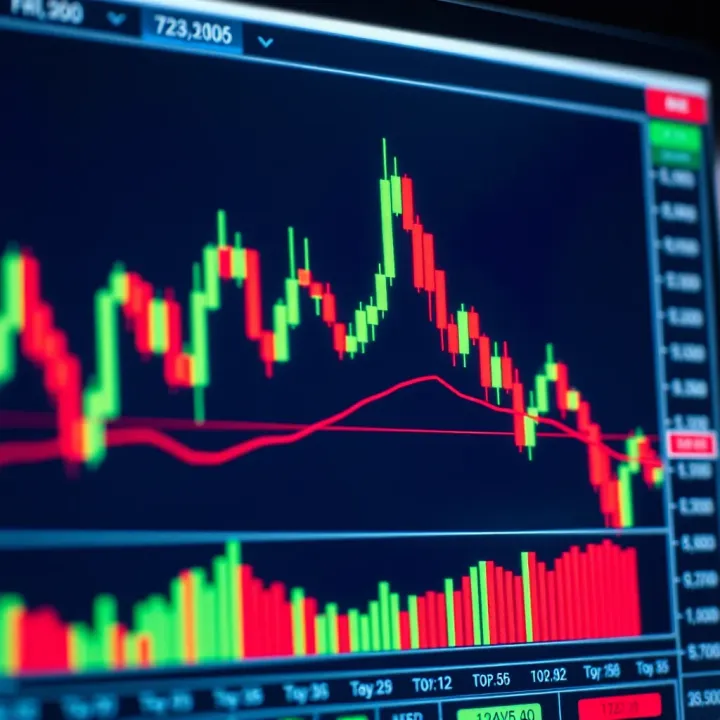
📊 Master forex trading charts to spot price shifts, trends, and opportunities. Learn how chart analysis guides smarter trades and better risk control in forex.

📚 Explore top Forex trading books perfect for Kenyan traders! Learn strategies, risk management, and market analysis to boost your trading skills and confidence.
Based on 8 reviews