
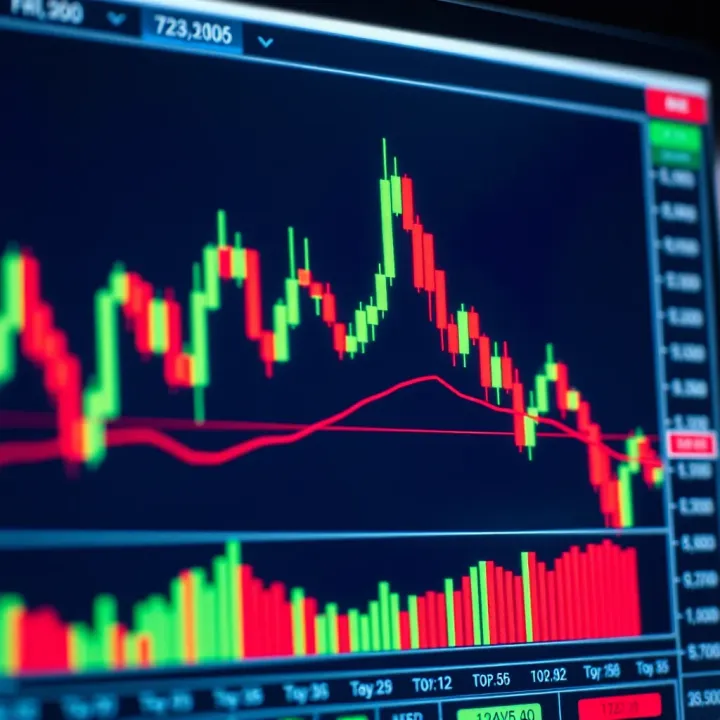
Understanding Forex Trading Charts
📊 Master forex trading charts to spot price shifts, trends, and opportunities. Learn how chart analysis guides smarter trades and better risk control in forex.
Edited By
Jack Morrison
Forex trading is often seen as something complex and suited only for experienced investors, but with the right examples, it becomes clearer how the whole system works. In Kenya, with growing internet access and mobile money services like M-Pesa, more people are getting involved in forex trading, seeking to grow their savings or diversify income.
This section breaks down what forex trading really is, using straightforward examples that show how currency pairs move and how traders take advantage of those moves. We will also highlight some key terms and concepts, so you can follow along and apply these ideas whether you’re analysing charts or planning your next trade.
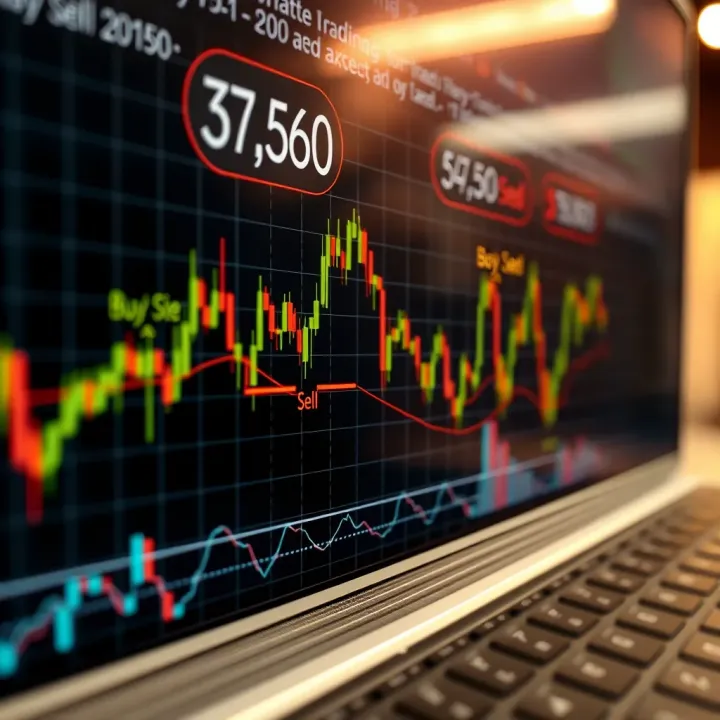
At its core, forex trading involves buying one currency and selling another at the same time. These currencies are paired, such as USD/KES (US dollar to Kenyan shilling) or EUR/USD (euro to US dollar). The price quoted for a currency pair tells you how much you need to pay in the second currency to get one unit of the first.
For example, if the USD/KES rate is 110, that means it costs 110 Kenyan shillings to buy one US dollar. If you believe the US dollar will strengthen against the shilling, you buy USD/KES. If the price moves to 112, you can sell and make a profit of 2 shillings per dollar traded.
Say you decide to buy USD/KES at 110. You purchase $1,000 worth, which costs you KS10,000. After some days, the rate rises to 112, meaning the dollar has appreciated against the shilling.
If you sell your $1,000 at 112, you get KS12,000. Your profit is KS,000 before considering trading fees or spread costs. This shows how exchange rate movements directly impact your gains or losses.
Leverage: Many brokers offer leverage, allowing you to trade with more money than you have. While this can increase gains, it also brings higher risk.
Spread: The difference between the buying price and selling price is called the spread. It’s a cost you pay when entering trades.
Risk Management: Protecting your funds by using stop-loss orders or limiting trade sizes helps avoid big losses.
Successful forex trading is about understanding how currencies move in response to global events, economics, and market sentiment, rather than simply guessing the direction.
These concepts form the foundation of forex trading. As we continue, we will explore more practical scenarios to strengthen your grasp and help you make informed trading decisions in Kenya’s online forex markets.
Grasping the basics of forex trading is essential for anyone looking to engage in currency markets, particularly for Kenyan traders. Understanding core concepts helps you spot trading opportunities and manage risks effectively. This section focuses on the foundational elements—what forex trading entails, key terms, and how the global market operates—setting the stage for practical examples.
Forex trading involves buying and selling currencies in pairs, for example, the US dollar against the Kenyan shilling (USD/KES). Traders aim to profit from fluctuations in exchange rates caused by economic events, political developments, or market sentiment. Unlike stocks, forex operates 24 hours daily, allowing traders in Nairobi to participate across different time zones.
The most traded pairs include USD/KES, EUR/USD, and GBP/USD. For many Kenyans, USD/KES is important because the US dollar affects imports, exports, and remittances. EUR/USD and GBP/USD attract regional traders interested in broader global movements. Knowing which pairs match your trading style and market knowledge is vital.
Forex is a decentralised market with no single exchange; transactions occur over the counter (OTC) through banks, brokers, and electronic platforms like MetaTrader. This system ensures constant liquidity and price movement. Kenyan traders access this market through brokers regulated locally or internationally, with trades influenced by global economic data and geopolitics.
The bid price is what buyers are willing to pay for a currency, while the ask price is what sellers want. For example, if the USD/KES pair has a bid of 110.50 and an ask of 110.55, you can sell at 110.50 or buy at 110.55. This difference matters for traders because it affects the entry and exit cost of trades.
Spread is the gap between the bid and ask price. Using the previous example, the spread is 0.05 KSh. This cost goes to the broker and represents a challenge for traders, especially those making many small trades like scalpers. Tight spreads are preferred because they reduce trading expenses.
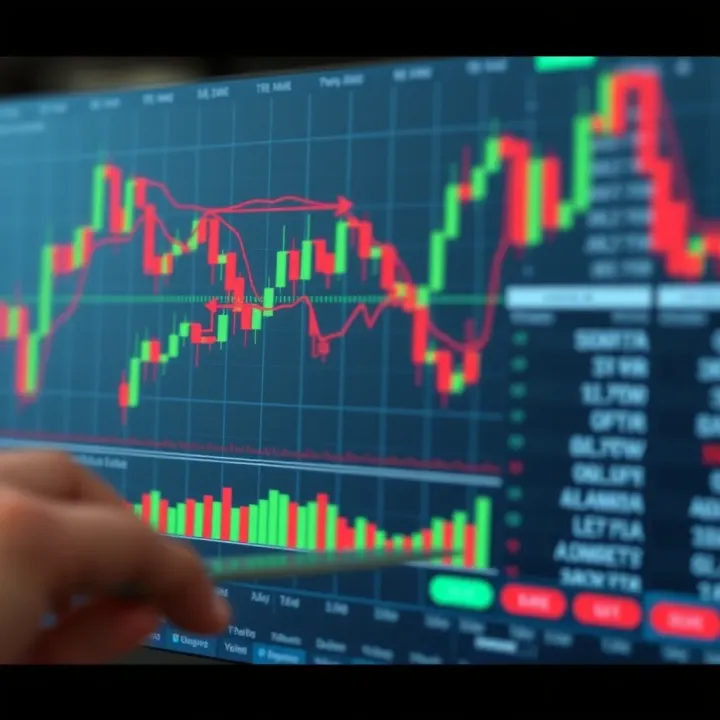
Leverage allows you to control a bigger trade size using less of your own money (margin). For example, with 1:100 leverage, a KSh 1,000 deposit lets you trade KSh 100,000 worth of currency. While it boosts potential profits, leverage also increases exposure to losses, so careful management is crucial.
A pip is the smallest price move in a currency pair, typically 0.0001 for most pairs. Lots are standard units of currency traded; one standard lot equals 100,000 units of the base currency. For Kenyan traders, understanding pips and lots helps calculate profits or losses precisely and plan how much capital to risk.
Mastering these basics provides a solid groundwork for effective forex trading, helping you trade smartly in the fast-paced currency market with confidence and clarity.
Breaking down a forex trade into clear steps helps make the trading process less mysterious. For Kenyan traders, understanding each stage—starting from picking a currency pair to closing a trade—gives a better feel for how decisions affect profit and loss in real time. It moves forex trading from abstract concepts into concrete actions you can actually follow or replicate.
Kenyan traders often focus on pairs like USD/KES and EUR/USD. The USD/KES pair is particularly relevant because it directly affects importers, exporters, and remittance recipients within Kenya. Watching this pair helps businesses and individuals grasp how their costs or earnings in shillings might shift daily. EUR/USD remains popular because it represents two major global economic zones, offering liquidity and opportunities.
When picking a pair, it’s sensible to consider your familiarity with the currencies and how much news or info is available that might affect them. For example, Kenya’s inflation reports or Central Bank of Kenya’s interest rate changes can sway USD/KES movements. Traders usually avoid pairs with low liquidity because prices can be erratic, making it tricky to predict trade outcomes.
Placing a buy or sell order is where your market view turns into action. Buying (going long) means you expect the base currency to strengthen against the quote currency; selling (going short) means you think it will weaken. For instance, if you believe the shilling is going to lose value against the dollar, you’d sell USD/KES to make a profit if your prediction proves right.
In practice, you enter the trade on a trading platform by choosing the currency pair, specifying if you buy or sell, and setting the amount or lot size. The current market price shown on the platform guides where you open your position. Real prices fluctuate every second, so knowing how to lock in your trade promptly prevents slipping into worse rates.
Calculating how much you gain or lose requires understanding pips—the smallest price movement—and lot sizes, which determine the volume you're trading. For example, if you buy one standard lot of USD/KES (typically 100,000 units) at 110.50 and sell at 110.80, the 30-pip gain translates to KSh 3,000 profit (30 pips × KSh 100 per pip).
Leverage plays a big role, letting you control a large position with a small deposit. Say you use 50:1 leverage; a KSh 2,000 deposit allows you to trade KSh 100,000 worth of currency. While this boosts gains for small price changes, losses grow just as fast. If the market moves against you by 20 pips, a leveraged trade can wipe your deposit quickly. It’s essential to manage leverage cautiously to avoid unexpected deep losses.
Successful trading depends on clear steps: choosing pairs you understand, entering orders correctly, and mastering profit/loss calculations. Practising with a demo account using live prices before risking real money is often a wise move.
This hands-on example approach equips Kenyan traders with the practical know-how to navigate forex with confidence and control over their investments.
Understanding different forex trading strategies is essential for any trader aiming to succeed in the market. This section breaks down practical approaches that Kenyan traders often use to navigate the fast-moving and sometimes unpredictable forex market. Knowing how these strategies work allows you to match your trading style with your risk appetite and market conditions.
Scalping involves making multiple trades within short timeframes, often minutes, to gain small profits from tiny price movements. For example, a scalper might buy USD/KES at 110.50 and sell very quickly at 110.52, aiming for a 2-pip gain. This method requires constant attention to charts and quick decisions, which suits traders who can watch the market actively during Nairobi business hours.
However, the risks here include transaction costs and sudden market swings. Because you open and close positions quickly, spreads and commissions can eat into profits. Plus, unexpected news during the day can swing prices dramatically, causing losses if trades don't close fast enough. That said, scalping can be rewarding if you master quick execution and strict discipline.
Swing trading is about holding positions for several days or even a week, aiming to capture more substantial price moves. Suppose you identify a rising trend in EUR/USD, showing consistent gains due to favourable European economic reports. You then buy at 1.0900 and exit at 1.1050 after several days as the trend peaks, locking in a 150-pip profit.
Using trends to decide when to enter or exit a trade helps swing traders avoid the noise of small daily fluctuations. Relying on technical indicators, like moving averages or trendlines, traders can spot when a currency pair is likely to continue in the same direction or reverse. This strategy offers the benefit of less screen time and reduced stress compared to scalping, but risks include overnight market gaps and broader economic changes impacting your position.
Both scalping and swing trading require a solid understanding of market behaviour, plus clear rules for entry and exit. Choosing the right strategy depends on your available time, risk tolerance, and trading preferences.
By practising these strategies with real forex pairs such as USD/KES or EUR/USD, Kenyan traders can develop skills to navigate the forex market confidently and effectively.
Managing risks is a key part of forex trading, especially for those operating in Kenya’s fast-growing forex market. Without a clear strategy to control risks, even experienced traders can face significant losses. Forex markets are affected by many factors—economic indicators, political shifts, and global events—that make price movements unpredictable. A proper risk management plan helps traders protect their capital and stay in the game longer.
Setting limits to control losses is a practical way to guard against sudden market moves. A stop loss order automatically closes a trade when the price hits a specific level, preventing further losses beyond what the trader is willing to accept. This tool is crucial because it removes emotion from trading decisions and ensures losses remain manageable.
For example, say you buy USD/KES at 110.00, expecting the Kenyan shilling to weaken. To protect yourself, you might set a stop loss at 109.50. If the price drops to this level, your trade closes automatically, capping your loss. On the flip side, a take profit order closes your trade when the price reaches a favourable point, locking in gains without having to watch the market constantly.
Consider a trader who buys EUR/USD at 1.1000 with a stop loss set at 1.0950. The intention is to limit the loss to 50 pips in case the market moves against them. If the Euro weakens unexpectedly due to a political announcement, the rate might fall to 1.0950 and trigger the stop loss, closing the trade. This protects the trader from larger losses that could affect their overall balance.
Stop loss orders are especially useful during volatile Kenyan market times, such as during Central Bank of Kenya announcements or election seasons, when price swings can be sharp and sudden.
Leverage allows traders to control a larger position with a relatively small deposit known as margin. While this can increase potential profits, it significantly boosts the risk exposure as well. Margin requirements depend on the leverage ratio; for example, with 1:100 leverage, a trader only needs KS,000 margin to control a KS00,000 position.
Traders must understand that higher leverage means smaller market moves can cause greater changes in their account balance. This is why many Kenyan brokers offer different leverage options to fit varying risk appetites but always advise caution.
Imagine a trader opens a USD/JPY position worth KS00,000 using 1:100 leverage with just KS,000 margin. If the trade moves against them by 2% (which seems small), the loss equals KS,000—twice the margin. Without proper risk controls like stop losses, such leverage can wipe out the trader’s deposited funds rapidly.
This scenario shows how leverage acts like a double-edged sword. On one hand, it can grow profits quickly; on the other, it can blow up accounts just as fast. Kenyan traders should always combine leverage use with strict risk management techniques to safeguard their investments.
Managing risks through stop loss, take profit, and measured use of leverage is not optional. It builds the foundation for consistent, disciplined forex trading that protects you from sudden shocks in the market.
Traders who master these tools are better positioned to handle the ups and downs of forex trading in Kenya’s evolving market landscape.
Understanding what affects forex prices, especially for the Kenyan shilling (KSh), is key for traders aiming to make informed decisions. Various local economic and political factors play direct roles in shaping currency value against other major currencies like the US dollar (USD) or euro (EUR). Knowing these drivers helps traders anticipate market moves and manage risk better.
Inflation data and interest rates from Central Bank of Kenya have a strong influence on the shilling’s strength. When inflation rises faster than anticipated, it erodes purchasing power, usually weakening KSh because imports become costlier and confidence dips. On the other hand, the Central Bank of Kenya (CBK) may raise benchmark interest rates to cool inflation. Higher rates often attract foreign investment as returns on deposits improve, which supports the shilling.
For example, in 2023, when inflation data showed a slight easing and the CBK lowered rates from 9.5% to 8.5%, the shilling experienced mild depreciation against the dollar. Traders observing such data use it to adjust positions, knowing that interest rate decisions typically influence capital flows and forex prices.
Trade balance and its effects on KSh also significantly affect forex markets. Kenya imports goods like petroleum, machinery, and vehicles, while exports include tea, coffee, and horticultural products. When imports exceed exports (trade deficit), demand for foreign currency rises to pay for imports, exerting pressure on KSh.
During periods when global tea prices drop, Kenya’s export earnings fall, worsening the trade balance. That scenario often leads to depreciation of the shilling. Traders watch monthly trade figures released by Kenya National Bureau of Statistics (KNBS) as timely indicators for market sentiment. A narrowing deficit can provide some relief to KSh.
Elections and policy changes are among the most watched political events that impact forex volatility in Kenya. Election cycles create uncertainty as investors wait to see who will hold office and what policies they might implement, especially regarding taxes, trade, and fiscal discipline.
For instance, during Kenya’s 2017 general election period, the shilling showed increased volatility due to fears over electoral disputes and unrest. Currency fluctuations during such times often reflect risk aversion from foreign investors pulling out funds or reduced remittance flows.
Examples of past market reactions illustrate how political happenings affect forex. After the Supreme Court annulled October 2017’s presidential election results, markets initially dipped but later stabilised once a repeat election was scheduled. Similarly, changes in government import taxes or fuel subsidies can cause sharp short-term swings in KSh forex rates.
This sensitivity means traders need to stay updated on Kenya’s political climate and expected policy decisions. Monitoring news and official announcements allows timely adjustments to trading strategies, minimising unexpected losses.
Kenya’s forex market reacts quickly to economic reports and political developments, making it essential for traders to factor these local influences when trading the shilling.
In Kenya’s context, an informed understanding of economic indicators and political events is crucial to navigate the forex market effectively. It helps traders better predict price moves and handle the inherent uncertainty of currency trading.
📊 Master forex trading charts to spot price shifts, trends, and opportunities. Learn how chart analysis guides smarter trades and better risk control in forex.
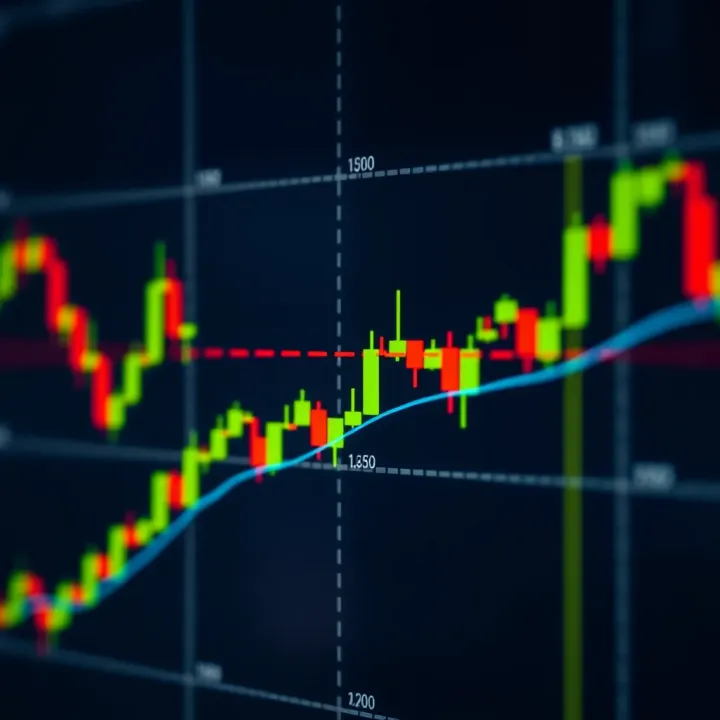
📈 Explore key Forex chart patterns to predict market moves and sharpen your trading skills. Gain practical insights tailored for Kenyan traders.
📊 Master candlestick patterns in forex trading with this guide tailored for Kenyan traders. Learn key setups and tips to boost your market moves effectively.

Learn effective forex trading strategies in Kenya, including market analysis, risk management, and trading psychology to boost your success. 📈💰
Based on 11 reviews