
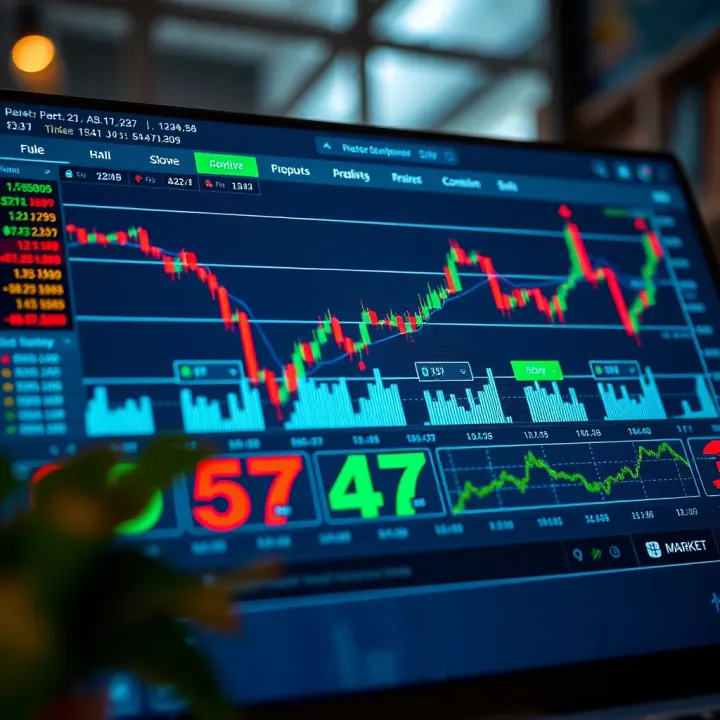
Forex Trading Guide for Kenyan Beginners
📈 Start Forex trading confidently in Kenya with this straightforward guide. Learn essential terms, manage risks well, and use trusted local platforms effectively.
Edited By
Jack Morrison
Forex trading, or trading foreign currencies, involves buying one currency while simultaneously selling another. This happens in pairs, like EUR/USD (Euro vs. US Dollar), and the goal is to profit from the changes in their exchange rates.
The forex market is the largest financial market in the world, with daily trading volume exceeding $6 trillion. It operates 24 hours a day, five days a week, thanks to financial centers across the globe—from New York to Tokyo. This continuous cycle makes forex trading accessible any time, whether you're an early riser or a night owl.
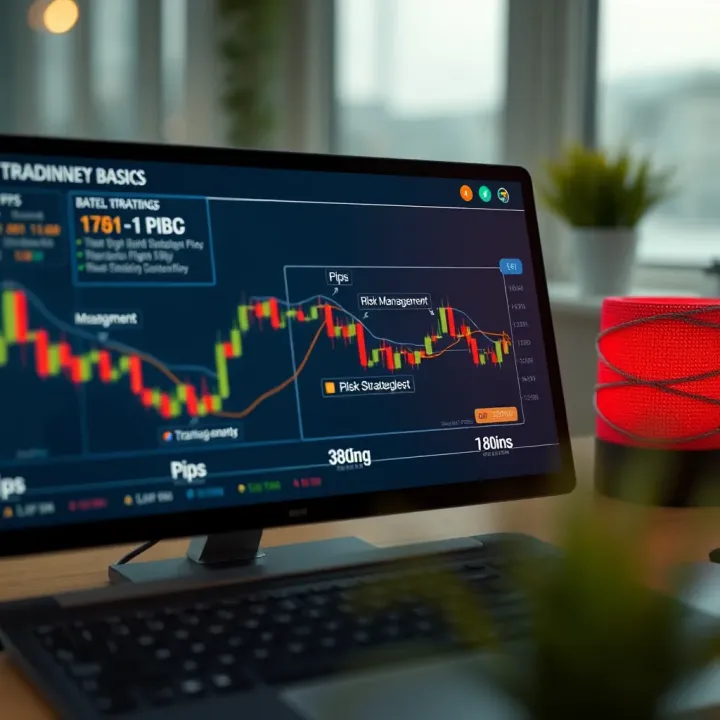
Understanding currency pairs is key. The first currency in the pair is the base currency, while the second is the quote currency. For example, if EUR/USD is 1.1200, it means 1 Euro costs 1.12 US Dollars. If that number goes up, the Euro is strengthening; if it goes down, the Dollar is gaining ground.
Another term you’ll see a lot is a pip, short for "percentage in point." It's the smallest movement in the exchange rate that traders keep an eye on. For most pairs, a pip equals 0.0001, so if EUR/USD moves from 1.1200 to 1.1205, that's a 5-pip increase.
Traders use different strategies based on how quickly they want to move. Some prefer quick trades within minutes or hours, known as scalping or day trading. Others swing trade, holding positions for days or weeks to catch bigger trends.
Keeping risks in check is critical. Even if a trade looks promising, markets can change fast. Tools like stop-loss orders let you set a point to cut losses. Think of it like setting a safety net so one bad trade won’t wipe out your account.
The bottom line is, forex trading isn’t about luck—it requires discipline, clear strategies, and smart risk management to succeed.
Finally, picking a good broker matters. Look for one that’s regulated by authorities such as the SEC or CFTC, offers competitive spreads, and provides a platform with all the tools you need—charts, real-time data, and easy order placement.
Getting these basics down first will save you from costly mistakes as you start trading currencies. With a solid foundation, you'll be ready to explore more advanced concepts and strategies.
Grasping the basics of the forex market gives traders a solid footing before diving in. This market isn't just about swapping dollars for euros or yen—it's a massive, daily-moving machine influenced by countless factors and players. Knowing how it ticks helps you read the price moves, spot opportunities, and avoid common pitfalls.
Forex trading means exchanging one currency for another to profit from changes in exchange rates. For example, if you believe the euro will strengthen against the dollar, you might buy euros and later sell them when their value rises. It isn’t just about travel money; traders buy and sell billions daily hoping to earn small but frequent gains.
Currency exchange operates like a global marketplace where currencies are always priced relative to each other. These prices fluctuate based on supply and demand influenced by economic data, interest rates, and political events. For instance, a strong U.S. jobs report might boost the dollar, making it expensive to buy euros, while poor data could weaken it.
While many beginners enter forex as individual retail traders, most forex volume comes from big institutions like banks, hedge funds, and multinational corporations. Retail traders often follow these heavy players’ moves to identify trends, but institutions generally have more resources to analyze data and execute large trades.
Central banks and governments influence forex markets by setting monetary policies and intervening to stabilize or devalue their currencies. For example, the Federal Reserve’s interest rate changes can ripple through forex prices. Sometimes, central banks step in directly to buy or sell their currency to control volatility, impacting traders worldwide.
Forex is unique because it runs 24 hours a day during weekdays, thanks to different time zones. Trading starts in Asia, then rolls into Europe, and finally the U.S., offering nonstop opportunities. This continuous flow boosts liquidity, meaning you can usually enter or exit trades without much delay.
There are four main sessions: Sydney, Tokyo, London, and New York. Each has its own character; for example, London and New York sessions see the highest activity and biggest price moves. Understanding when these sessions overlap helps traders find times with tighter spreads and better chances for profit.
Quick tip: Keeping an eye on which trading session you’re in can help you tailor your strategy—some trades work better during volatile hours, others during calm periods.
Understanding these basics sets you up for smarter forex decisions and avoids jumping in blind. From here, you’ll be ready to explore currency pairs, pips, and trading tactics with confidence.
Understanding the key terms in forex trading is essential before jumping in. These basics form the foundation of how the market operates and help you make sense of price movements and trading decisions. Let’s start by breaking down currency pairs and quotes.
A currency pair shows the value of one currency compared to another. The base currency is listed first and represents the currency you're buying or selling. The quote currency follows and tells you how much of it you need to purchase one unit of the base currency. For example, in the EUR/USD pair, EUR is the base, and USD is the quote. If the price is 1.12, it means 1 euro equals 1.12 dollars. This standard format helps traders quickly understand exchange rates and decide when to trade.
Forex pairs come in different categories: major, minor, and exotic pairs. Majors include the most traded currencies like EUR/USD, USD/JPY, and GBP/USD. These pairs have high liquidity and tighter spreads, making them popular with traders. Minors, or cross pairs, exclude the US dollar but involve other significant currencies like EUR/GBP or AUD/NZD. Exotics pair a major currency with one from a smaller or emerging market, like USD/TRY (Turkish lira). They usually have wider spreads and more volatility, which means higher risks and opportunities.
A pip is the smallest price move in a forex pair, typically the fourth decimal place (0.0001). It’s crucial because profits and losses are calculated in pips. For instance, if EUR/USD moves from 1.1200 to 1.1210, that’s a 10-pip change. Being familiar with pips lets traders measure gains or losses accurately.
Forex trading happens in units called lots. A standard lot is 100,000 units of the base currency, a mini lot is 10,000 units, and a micro lot is 1,000 units. Using smaller lots lets new traders manage their risk better by trading with less capital. For example, trading a micro lot of EUR/USD means you’re controlling 1,000 euros instead of 100,000, which reduces exposure.
Leverage lets you control a larger position with a smaller amount of money. If you have 50:1 leverage, $1,000 lets you trade $50,000 worth of currency. While leverage can amplify profits, it also magnifies losses. That’s why managing leverage wisely is key — using too much can wipe out your account quickly, especially in volatile markets.
Every forex pair has two prices: the bid (price to sell) and the ask (price to buy). The bid price is what buyers are willing to pay, while the ask price is the lowest sellers accept. The difference between the two is the spread, which represents a cost traders face.
The spread impacts your overall trading costs, especially for those who trade frequently or in small volumes. A tight spread means lower costs, which is why major pairs often appeal to traders — they usually have narrower spreads. For example, if EUR/USD has a bid of 1.1200 and an ask of 1.1202, the spread is 2 pips. You’d need the price to move beyond those 2 pips in your favor to start making a profit.
Understanding these fundamental terms helps build the confidence needed to trade forex effectively. Grasping currency pairs, pip values, lot sizes, leverage, and spreads will put you in a strong position to analyze the market and manage your trades wisely.
Starting your forex trading journey requires careful steps since your choices here affect your experience and success. This section covers the essentials like picking a broker, setting up your account, and understanding foundational tools.
Regulation and safety are your first checkpoints when selecting a broker. Traders should insist on brokers regulated by respected bodies like the U.S. Commodity Futures Trading Commission (CFTC) or the National Futures Association (NFA). Regulation ensures your money isn’t at risk of shady practices and that the broker meets certain standards. For instance, a regulated broker must segregate client funds, which means your deposits aren’t mingled with the company’s operating cash.
Trading platforms and tools can make or break your trading. Typical platforms like MetaTrader 4 or 5 offer charting tools, indicators, and the ability to place various order types. Some brokers even develop proprietary platforms with unique features or enhanced mobile apps, such as TD Ameritrade’s thinkorswim. You want a platform that's intuitive but also powerful, allowing you to analyze trends and execute trades quickly and reliably.
When it comes to fees and commissions, transparency pays off. Some brokers charge a commission on each trade, while others include fees within the spread—the difference between buying and selling prices. For example, brokers like OANDA feature competitive spreads with no extra commissions, which can benefit traders making frequent smaller trades. Always compare the total cost per trade, including hidden fees like inactivity or withdrawal charges.
Most brokers offer demo accounts for practice. These simulate real market conditions with fake money, letting you test strategies without risking cash. It’s a safe way to get comfortable with the trading platform and understand order placement before switching to a live account. Think of it like a flight simulator for pilots—practice first before handling the real deal.
Funding your account involves transferring money from your bank, credit card, or payment platforms like PayPal or Skrill to your trading account. This step depends on the broker’s accepted methods and processing times. For example, wire transfers might take a couple of days, while debit card deposits can be instant. Understanding these details upfront helps you avoid surprises when you want to trade quickly.
Finally, understanding order types is key to controlling your trades and managing risk. Common order types include market orders (buy/sell immediately at the current price), limit orders (execute only at a specified price or better), and stop orders (trigger trades when a price hits a set level). Mastering these lets you automate entries and exits, which is crucial during volatile market moments.
Starting forex trading without understanding these steps is like sailing into rough seas without checking your gear. Choose wisely, practice thoroughly, and you'll navigate the market with more confidence and control.
Understanding basic forex trading strategies is vital for anyone looking to trade currencies with purpose and confidence. Strategies offer a framework to interpret the dizzying flow of market data and help guide decisions about when to enter or exit trades. Without a strategy, trading can feel like gambling, but with one, it becomes a calculated process that can adapt to changing market conditions.
Using charts and indicators is at the heart of technical analysis. Traders rely on charts to visualize price movements over different time frames. Tools like moving averages, RSI (Relative Strength Index), and MACD (Moving Average Convergence Divergence) help spot momentum, overbought or oversold conditions, and potential reversals. For example, a trader might notice the EUR/USD pair crossing above its 50-day moving average, signaling a possible upward trend.
Identifying trends and patterns helps traders predict future price direction. Recognizable shapes such as head and shoulders, double tops, or flags can indicate when a trend may continue or reverse. If USD/JPY forms a double bottom, it might suggest the currency pair is about to bounce upwards after a decline. Being able to identify these patterns allows traders to position themselves more favorably.
Economic indicators and news directly influence currency values and can’t be overlooked. Key reports like U.S. Non-Farm Payrolls, inflation data, or Federal Reserve interest rate decisions can trigger sharp moves in forex markets. For instance, a stronger-than-expected jobs report usually strengthens the U.S. dollar because it signals economic health.
How events influence currency values is crucial to understand. Political events, trade negotiations, or unexpected crises can cause sudden currency swings. Consider Brexit announcements that led to volatility in the British pound. Traders who follow news closely can anticipate these movements and adjust their positions accordingly.
Balancing technical and fundamental insights creates a more rounded approach. Technical analysis can show you when to make a move, while fundamental data can explain why the move might happen. For example, if technical charts suggest a sell signal on USD/CAD but the Bank of Canada hints at tightening monetary policy, a trader might hold off, considering the fundamental push may counter technical signals.
Developing a trading plan ties all this together. A solid plan defines entry and exit rules, risk levels, and trade size. It also outlines how to react to different market scenarios. One trader might decide to risk only 1% of their account per trade and set clear stop-loss orders. This discipline limits losses and helps manage emotions.
The bottom line is, combining clear strategies with consistent execution can turn the wild world of forex into a manageable and potentially profitable endeavor.
By mastering these foundational strategies, you build a toolkit that helps filter noise and focus on trades with the best chances of success.
Managing risk and emotions plays a critical role in successful forex trading. Without a solid plan to control losses and maintain emotional balance, even the best strategies can fall apart fast. This section details key techniques to protect your capital and keep a steady mindset.
Setting stop-loss and take-profit points prevents small losses from turning into major setbacks. A stop-loss order automatically closes your position if the market moves against you by a set amount. For example, if you buy EUR/USD at 1.1050, setting a stop-loss at 1.1000 limits your loss to 50 pips. Similarly, take-profit points lock in gains when the price hits your target. These orders are essential because the forex market rarely moves in a straight line, and they help you stick to your trading plan without second-guessing.
Position sizing and leverage control focus on how much of your account you risk on a single trade. Position size determines the volume you buy or sell, while leverage amplifies your buying power but also your risk. For instance, using 50:1 leverage means controlling $50,000 with only $1,000 of your own money. While this can boost profits, it can equally skyrocket losses if you’re not careful. A good rule is to risk no more than 1-2% of your account balance per trade. This approach limits damage during losing streaks and keeps your account sustainable.
Avoiding common trading mistakes like chasing losses or overtrading is crucial. For example, trying to recoup a bad trade by doubling the next trade amount often leads to even bigger losses. Sticking to your strategy and accepting losses as part of trading prevents emotional decisions that hurt your bottom line. Monitoring your performance and learning from past trades also helps curb impulsive moves.
Staying disciplined and patient is tough but pays off. The forex market tests your nerves daily, with volatile price swings and news events. Successful traders resist the urge to jump in without a clear setup. They wait patiently for confirmation and follow their trading rules consistently. For instance, if your strategy signals a buy at 1.1200, you don’t buy early out of excitement or fear of missing out. Keeping a trading journal can strengthen discipline by allowing you to review your choices objectively.
Managing risk and emotions isn’t just about saving money—it’s about building habits that make you a better trader over time.
Mastering these elements keeps losses manageable and helps you maintain clear thinking under pressure, both essential for long-term success in forex trading.
📈 Start Forex trading confidently in Kenya with this straightforward guide. Learn essential terms, manage risks well, and use trusted local platforms effectively.
📈 Learn forex trading basics in Kenya: understand currency pairs, leverage, platforms, and risks. Get practical tips to grow skills and manage money confidently.
📈 Start your forex trading journey in Kenya with our practical PDF guide. Learn market basics, M-Pesa payments, risk management, and local tips for success.
Learn forex trading basics 🇰🇪! From currency pairs to risk tips, get practical insights to trade confidently and wisely in Kenya's forex market 💹.
Based on 9 reviews