
Effective Forex Trading Strategies for Kenyan Traders
Boost your forex trading skills with practical strategies and find trustworthy PDF guides for Kenyan traders 🇰🇪. Learn how to use them for smarter trading decisions 📈.
Edited By
Isabella Mitchell
Currency trading, or forex, is the largest financial market worldwide, moving over $6 trillion daily. It’s a fast-paced arena where traders buy and sell currencies aiming to profit from exchange rate fluctuations. But unlike stock markets, forex operates 24 hours across global financial centers, adding complexity for those unfamiliar with its rhythm.
Understanding key concepts lays the groundwork for effective trading strategies:

Currency Pairs: Forex trades always involve pairs like EUR/USD, meaning you buy one currency while selling another.
Pips and Lots: Price changes are measured in pips (the smallest price move), and trades happen in lots (standardized amounts).
Leverage: Forex brokers often offer leverage, letting you control large positions with little capital—but this amplifies both gains and losses.
The bottom line is, mastering forex demands more than knowing market hours or ticker symbols—it requires grasping the mechanics behind price moves and trade sizes.
Successful traders combine two main approaches: technical analysis, analyzing charts and indicators for patterns; and fundamental analysis, evaluating economic data, central bank policies, and geopolitical events that sway currencies.
Risk management also plays a pivotal role. Even the best strategies fail without rules to limit losses—using stop-loss orders, position sizing wisely, and not risking beyond a small fraction of your capital per trade.
And don’t underestimate psychological factors. Emotions like fear and greed can cloud judgment, prompting premature exits or reckless bets. Discipline and patience often separate consistent winners from occasional gamblers.
To give a taste of what's ahead, here’s a quick rundown:
Technical Setups: Trend following, breakout trading, and moving average signals.
Fundamental Moves: Interest rate expectations, economic releases, and news impact.
Risk Rules: Calculating risk-to-reward ratios, setting stop losses.
Trader Mindset: Staying objective and sticking to your plan.
This guide aims to cut through noise and equip you with practical, tested strategies—not vague tips—you can apply right away. Currency trading has plenty of opportunities, but only if you play smart, stay informed, and control your risks.
Understanding fundamental methods is essential for anyone diving into currency trading. These methods focus on real-world economic factors that drive currency values, helping traders anticipate market moves based on economic health rather than just price charts.
Interest rates are probably the most influential factor in currency markets. Central banks set benchmark rates, which affect how attractive a currency is to investors. For example, if the Federal Reserve raises interest rates, the dollar often strengthens because higher yields attract foreign capital. Traders watch rate changes closely since even a small hike or cut can move forex pairs significantly.
Employment data like nonfarm payrolls in the U.S. provide a snapshot of labor market health. Strong job growth signals economic strength, boosting confidence in the currency. Conversely, rising unemployment can signal economic trouble and weaken the currency. For instance, a surprise rise in unemployment claims can send the dollar lower even if other data seem solid.
Inflation rates affect purchasing power and influence central bank decisions. When inflation climbs above targeted levels, central banks may tighten policy to cool the economy, often lifting the currency's value. Traders monitor inflation reports like the Consumer Price Index (CPI) because sudden inflation jumps can trigger rapid rate hikes and corresponding currency shifts.
Monetary policy announcements from central banks set the trading tone across forex markets. These include decisions on interest rates, reserve requirements, and more. When the European Central Bank (ECB) announces a rate change, it directly influences the euro’s value. Traders must digest not just the decision but the tone of any accompanying statements to gauge future moves.
Quantitative easing (QE) refers to central banks buying assets to inject money into the economy. This often weakens a currency by increasing the money supply. For example, extended QE by the Bank of Japan has kept the yen relatively weak compared to other currencies. Recognizing when QE starts or ends helps traders anticipate currency trends.
Forward guidance is a communication tool where central banks hint at future policy moves. Clear forward guidance can reduce market uncertainty. For example, if the Fed signals steady rates for the next quarter, it can calm volatility in the dollar, guiding traders on positioning. Ignoring these cues often leads to missed opportunities or unexpected losses.
Strong fundamental understanding equips traders to base decisions on economic realities, not just price patterns. Combining these insights with technical tools creates a balanced approach to currency trading.
Technical analysis plays a key role in currency trading by helping traders spot market trends and time entry and exit points. Unlike fundamental analysis, which focuses on economic data, technical methods examine price action and trading volumes to predict the market’s direction. These approaches offer practical benefits, such as clear signals and the ability to apply rules consistently, which are essential when navigating the fast-moving forex markets.
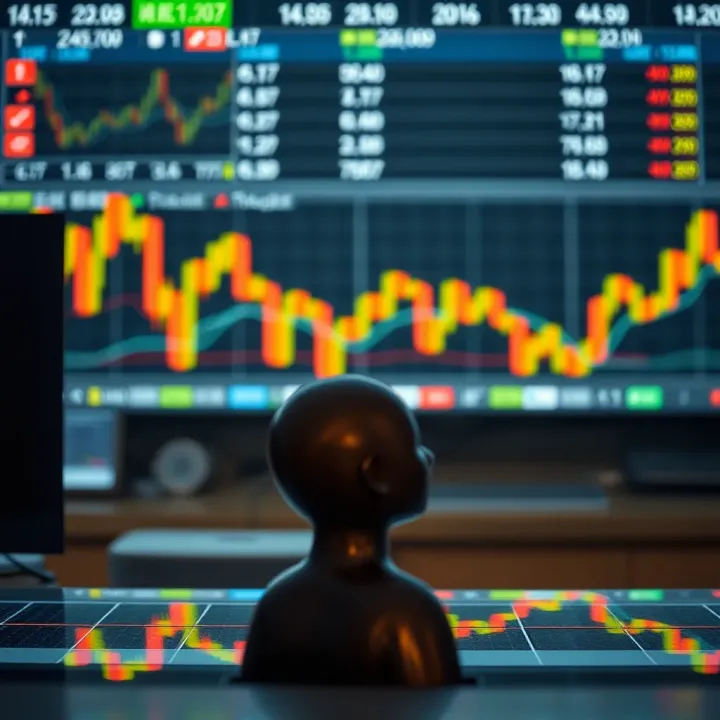
Moving averages smooth out price data to reveal trends more clearly. The simple moving average (SMA) takes the average closing price over a set period, giving equal weight to each price. In contrast, the exponential moving average (EMA) assigns more weight to recent prices, making it more responsive to recent market changes. For example, when trading the EUR/USD pair, an EMA can help catch early trend shifts faster than an SMA, which might lag behind.
Choosing between SMA and EMA depends on your trading style. If you prioritize quick responses to price moves, EMA fits well. On the other hand, SMA offers a steadier view, useful for filtering out noise during sideways markets.
Crossovers involve tracking two moving averages of different lengths—say, a 50-day and a 200-day SMA. When the shorter-term average crosses above the longer one, it suggests upward momentum, often called a bullish crossover. Traders might take this as a signal to buy. Conversely, a bearish crossover happens when the shorter average drops below the longer one, indicating potential downtrends.
The practical value here is in trend confirmation. Crossovers help avoid false signals by requiring two conditions to align. For instance, during a US dollar rally, a crossover between the 50-day and 200-day EMAs could confirm a strong upward trend, giving traders more confidence.
Support and resistance levels are price points where the market historically reverses or pauses. Support is where demand tends to overpower supply, stopping a price decline. Resistance is where selling pressure tops buying interest, capping a price rise. Identifying these zones on a chart—such as recent swing highs or lows—helps traders set entry, exit, or stop points.
For example, if the USD/JPY pair consistently hits resistance around 115.00, traders might expect a pullback near that level. Watching these zones reduces guesswork by pointing to likely reaction spots.
A breakout occurs when the price moves above resistance or below support with increased volume, suggesting a new trend or momentum shift. In contrast, reversals happen when price fails to break these levels and instead changes direction.
Consider trading the GBP/USD: a breakout above a strong resistance level near 1.3500 could indicate expanding bullish strength and a potential long trade. But if price hits resistance then sharply reverses, it signals weak buying pressure and advises caution or a short position.
These concepts allow traders to distinguish between sustainable moves and false alarms, improving trade timing.
RSI measures the speed and change of recent price movements to identify overbought or oversold conditions. Typically, an RSI above 70 signals that a currency is overbought and may face a pullback, while below 30 indicates oversold conditions and a possible bounce.
For instance, if the USD/CAD shows RSI crossing above 70, a trader might prepare to exit long positions or even consider short trades anticipating a correction.
MACD tracks the relationship between two EMAs (commonly 12-day and 26-day) to spot momentum changes. When the MACD line crosses above the signal line, it's a buy signal; crossing below suggests selling.
This tool shines in confirming trend strength. Trading AUD/USD, a bullish MACD crossover during an uptrend can reinforce holding positions, while bearish crossovers warn of weakening momentum.
Using these technical tools together—moving averages, support/resistance, and momentum indicators—helps traders identify meaningful trends and time their trades more precisely, turning chart patterns into actionable signals.
Bringing together different trading strategies can boost your chances of success in the forex market. Combining fundamental analysis, which looks at economic factors, with technical indicators that track price movements, helps create a fuller picture before making a trade. This method reduces the risk of acting on incomplete information and offers stronger trade signals.
Confirming trades with multiple signals means using both economic conditions and price patterns to validate your trading decisions. For example, if a strong employment report pushes the US dollar higher (a fundamental trigger), and at the same time, the currency pair breaks above a key moving average (a technical signal), these combined indicators give you more confidence that the trend might continue. Relying on one signal alone can lead to false entries, but when both align, the odds improve.
Balancing short-term and long-term factors is essential in forex trading. Fundamentals, like inflation data or central bank announcements, often affect currency values over weeks or months. On the other hand, technical analysis helps spot entry points within shorter periods, such as hours or days. A trader might hold a position based on positive long-term fundamentals but wait for a technical pullback before jumping in. This approach prevents chasing trades and lets you act strategically.
Using tools for recognizing setups helps you stay on top of the market without staring at charts all day. Automated alerts can notify you when a currency pair hits a specific moving average crossover or breaks out from a support level. Many platforms like TradingView or MetaTrader let you customize these alerts based on your rules, so you don’t miss potential trades.
Reducing manual monitoring time is a big plus, especially for active traders juggling multiple pairs. Instead of reacting late or letting opportunities slip by, scanners sift through data to highlight only relevant setups. For instance, a scanner might flag all EUR/USD and GBP/USD pairs showing oversold RSI conditions simultaneously. This focused approach saves time and helps you act on only the most promising trades, making your process more efficient.
Combining strategies isn't about complicating your workflow but about adding layers of confirmation and discipline that improve your edge. Use tools and signals smartly to trade with better clarity and less guesswork.
Managing risks and protecting capital forms the backbone of consistent currency trading. Without a solid approach to risk, even the most promising strategy can crumble after a string of bad trades. It's about knowing how much you stand to lose before entering a trade and taking steps to prevent losses from eating up your entire account.
Determining effective stop-loss levels requires a balance between protecting your capital and giving your trade enough room to breathe. Too tight a stop-loss might trigger prematurely on normal market noise, while too wide exposes you to unnecessary large losses. Traders often place stop-loss orders just beyond recent support or resistance levels, or at a percentage-based threshold from their entry price. For example, if you enter a trade at $1.2000 on the EUR/USD, placing a stop-loss 50 pips away at $1.1950 ensures you limit losses to that range. This disciplined exit point stops emotions from driving your decisions when the market goes against you.
Using take-profit to secure gains is just as crucial to protect profits from sudden reversals. Take-profit orders close your position automatically once the price hits your target, helping lock in gains without constantly monitoring the charts. Setting take-profit levels at logically significant points, such as past highs or a risk-reward ratio of 2:1, makes this effective. Suppose you risk 50 pips on a trade; targeting 100 pips gain respects good risk management rules while keeping your trades worthwhile.
Calculating risk per trade means deciding in advance how much of your total capital you’re risking on every trade, usually expressed as a percentage. A common recommendation is to risk no more than 1–2% of your trading capital per trade. For example, if your account balance is $10,000, risking 1% means you accept a $100 loss if the stop-loss is hit. Your position size adjusts according to the difference between entry price and stop-loss to maintain this risk limit. This method protects you from hitting large losses too quickly and keeps your capital available to trade another day.
Diversifying currency exposure helps reduce risk by spreading your trades across different currency pairs instead of putting all your eggs in one basket. Different currencies react in varying ways to economic data and geopolitical events. If you only trade USD/JPY, a sudden event affecting Japan could wipe out your gains, but holding positions in EUR/USD or GBP/USD too may buffer losses. Also, it’s wise to avoid over-concentration in highly correlated pairs. For instance, USD/CAD and USD/MXN move somewhat together; diversifying with EUR/GBP or AUD/JPY can add a layer of protection.
The bottom line is that proactive risk management and protecting your trading capital aren't optional—they're the only ways to survive and thrive in the forex markets. Stop-losses, take-profits, sensible position sizing, and diversification work together as your safety net and growth engine.
Trading discipline and mindset directly impact your performance in the forex market. Without control over impulses and a clear plan, even the best strategies can fall apart. Staying disciplined means sticking to your trading rules consistently, while maintaining the right mindset helps you manage stress and react rationally to market shifts.
Avoiding impulsive decisions is a big deal in currency trading. Imagine you see a currency pair suddenly spike due to a news release. Acting immediately without analyzing the bigger picture might lead you into traps or false breakouts. Instead, pause and check confirmations like volume or trend strength before pulling the trigger. Many traders lose money trying to chase quick profits from emotional reactions.
Accepting losses as part of trading is tough but necessary. No trader wins 100% of the time, and losses are just part of the game. For example, a trader who holds grudges against losses might double down on bad trades, blowing up their account. Instead, viewing losses as learning steps helps keep the right mindset and prevents panic-induced mistakes. Setting stop-loss orders can also make accepting losses less painful and more systematic.
Setting clear goals grounds your trading approach and decision-making. Your goals might be to earn a targeted monthly return or to keep losses within a fixed percentage per trade. For example, setting a goal to limit losses to 2% per trade ensures you don't risk too much capital on a single bet. Clear goals help you measure progress and adjust strategies without second-guessing.
Adapting strategy through experience means staying flexible as market conditions change. What worked six months ago might not be as effective today due to shifts in volatility or central bank policies. Tracking your trades, analyzing what worked and what didn't, and then tweaking your approach keeps your strategy relevant. For instance, if you notice your favorite momentum indicator misses reversals, consider adding a confirmation from MACD or RSI before entering trades.
Bottom line: Discipline and mindset aren't just soft skills—they shape how effectively you apply your strategy and manage risks in currency trading.
Boost your forex trading skills with practical strategies and find trustworthy PDF guides for Kenyan traders 🇰🇪. Learn how to use them for smarter trading decisions 📈.
Learn effective binary trading strategies tailored for Kenyan traders 🇰🇪. Understand binary options, risk management, analysis, and tips for success 📊💡.
Discover practical forex trading strategies for Kenyan traders, including technical analysis, risk management, and psychology 📈💼💡 Build a solid plan for success!
📉 Master forex risk management with strategies like position sizing, stop-loss orders, and tech tools. Stay sharp, avoid pitfalls, and protect your capital effectively.
Based on 14 reviews