
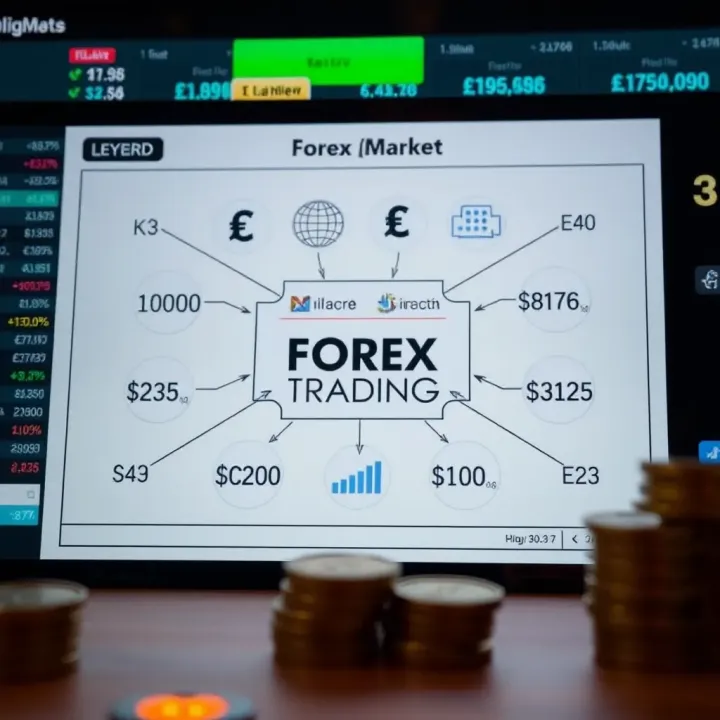
Learn Forex Trading Step by Step
📈 Learn forex trading step by step with this guide! Master the basics, pick the right tools, practice smartly, and build a winning strategy for steady profits.
Edited By
Emily Clarke
Forex trading involves buying and selling currencies to profit from changes in exchange rates. Unlike stock markets, forex operates 24 hours a day across global financial centers, offering flexibility for traders worldwide. The daily trading volume exceeds $6 trillion, making it the largest financial market.
Starting in forex means understanding currency pairs. For example, EUR/USD represents how many U.S. dollars one euro can buy. Traders speculate on whether this price will rise or fall, aiming to enter and exit trades profitably.
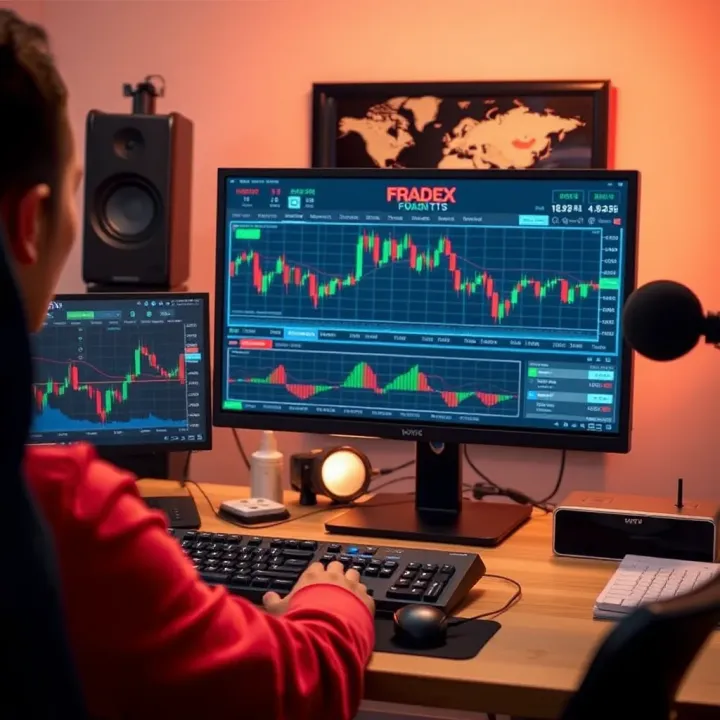
Grasping concepts like pips (smallest price movement), leverage (borrowing to increase position size), and spreads (cost difference between buying and selling prices) is essential. Leverage can amplify both gains and losses, so knowing how to manage it is key.
Setting up your trading environment also matters. Choose a reliable trading platform like MetaTrader 4 or 5, which offers charting tools, technical indicators, and access to live pricing. Pair these with a strong internet connection and a disciplined routine.
Successful forex traders combine solid knowledge with practical experience, disciplined risk management, and ongoing learning.
In this guide, you’ll find step-by-step instructions on mastering these basics, building strategies, controlling risks effectively, and continuously improving your game. Whether you plan to trade part-time or full-time, understanding these foundations helps you trade more confidently and avoid costly mistakes.
The bottom line is that forex trading isn’t about guessing; it’s about making informed decisions based on market analysis and personal trading plans. With the right approach, you can navigate this fast-moving market without being overwhelmed.
Grasping the basic concepts of forex trading sets the foundation for making informed decisions in the market. Without a clear understanding of what forex trading involves, its terminology, and how the market functions, traders can easily find themselves lost or making costly mistakes. Getting these fundamentals right prepares you for everything that follows, from choosing the right broker to crafting your strategies.
Forex trading is the buying and selling of currencies against one another in the global currency market. Essentially, you're exchanging one currency for another, hoping the exchange rate moves in your favor. For example, if you believe the Euro (EUR) will strengthen against the US Dollar (USD), you might buy the EUR/USD pair. Just like swapping dollars for euros when you're traveling, forex trading involves currency pairs that determine one currency's value relative to another.
The forex market operates 24 hours a day, five days a week, across various financial hubs like New York, London, Tokyo, and Sydney. Unlike stock exchanges, forex trading doesn’t happen in a centralized location; it’s a decentralized market where trading takes place over electronic networks between various participants worldwide. This continuous flow means you can trade anytime during the week, taking advantage of different market sessions and volatility.
Major players in the forex market include central banks, commercial banks, hedge funds, corporations, and retail traders like you. Central banks influence currency prices through monetary policies, while commercial banks and hedge funds carry out the bulk of transactions. Retail traders offer liquidity and take positions based on individual analysis or strategy. Keeping an eye on market hours lets you know when liquidity peaks—for example, the London and New York sessions overlap and usually offer more trading opportunities.
Pips, lots, and leverage are core concepts in forex trading. A pip is the smallest unit of price movement, often 0.0001 for most currency pairs. For example, if EUR/USD moves from 1.1050 to 1.1051, that's one pip. A lot refers to the size of your trade, typically 100,000 units of the base currency for a standard lot. However, mini (10,000 units) and micro (1,000 units) lots allow more manageable investing as a beginner. Leverage lets you control larger positions with a smaller amount of money — for instance, 50:1 leverage means you can trade $50,000 with just $1,000. But be careful: leverage can amplify gains and losses alike.
The bid price is what buyers are willing to pay, while the ask price is what sellers demand. The difference between these is crucial—it’s called the spread, which represents the trading cost built into every trade. A tighter spread usually means better pricing for the trader. For example, if EUR/USD is quoted at 1.1050/1.1052, the spread is 2 pips.
Sometimes your order might execute at a different price than expected due to slippage, which happens during fast market moves or low liquidity. This means your trade could enter at a slightly worse or better rate than the one you saw, impacting your profit or loss. Understanding slippage helps you manage expectations and select the right trading times or brokers to reduce its impact.
Knowing these basics not only improves your trading but helps you avoid common pitfalls that beginners often face. This foundation lets you make smarter moves, reduce risks, and better understand how the forex world operates.
Before you jump into forex trading, setting up the right foundation is key. This step ensures you avoid common pitfalls and start on solid ground. Getting your broker, account, and tools correctly aligned can save you time, stress, and money later on.
Picking a broker with proper regulation is a must. Regulatory bodies like the Commodity Futures Trading Commission (CFTC) or the National Futures Association (NFA) in the U.S. keep brokers in check. This means your funds are protected—beyond just hopeful promises. For example, if a broker is registered with the NFA, you can trust they meet certain standards around transparency and financial strength.
Trading fees can quickly eat into your profits. Look closely at how brokers charge: some spread the difference between bid and ask prices, while others add commissions per trade. For instance, a broker might offer tight spreads but charge a $5 commission per 100,000 currency units traded. Understanding these costs helps you calculate your break-even point better.
The trading platform is your cockpit in forex trading. Popular platforms like MetaTrader 4 or 5 offer charting tools, alerts, and automated trading options. If you prefer mobile trading, make sure the broker supports a user-friendly app. These features can speed up decision-making and help you stay on top of fast moves.
Forex brokers offer various account types—standard, mini, and micro—based on lot sizes and minimum deposits. A micro account, with its smaller trade sizes and minimum deposit (say $50), suits beginners who want to test strategies without risking much cash. On the other hand, standard accounts often require larger deposits but offer better spreads and faster execution.
Funding your account can be done by bank transfer, credit card, or electronic wallets like PayPal or Skrill. Deposit minimums vary; some brokers let you start with $10, but others might require $500 or more. Also, watch out for deposit fees that could reduce your starting capital.
Mastering the layout of your trading platform helps you act quickly when opportunities arise. For example, MetaTrader platforms divide the screen into charts, market watch, and terminal windows. Understanding these elements speeds up your ability to view price movements, news feeds, and trade execution.
Knowing how to place orders—market, limit, stop—and monitor your open trades is essential. For instance, setting a stop-loss order immediately after entering a trade helps protect your capital from unexpected moves. Keeping an eye on your positions in real-time ensures you can adjust or close trades as market conditions change.
Starting right with a trusted broker, the right account, and a firm grasp of your trading platform can significantly increase your confidence and chances of success in forex trading.
The bottom line: setting up isn’t just paperwork and clicking buttons. It’s about building a setup that backs your trading strategy and safeguards your investment from day one.
Mastering trading strategies in forex is a key step in turning theory into practical profits. These strategies help you both interpret market movements and respond with informed decisions, avoiding guesswork. Without a solid grasp of trading strategies, chances grow higher that you'll make swings based on emotions rather than data.
Charts are your roadmap in forex trading. They show historical price movements, allowing you to spot patterns and trends. Indicators, like moving averages or the Relative Strength Index (RSI), add layers to your analysis by signaling momentum or potential reversals. For example, if the 50-day moving average crosses above the 200-day moving average, that “golden cross” often signals a bullish trend.
Support and resistance levels act like invisible barriers on your charts. Support is where prices tend to stop falling and bounce back up, while resistance is where prices struggle to rise further. Recognizing these levels helps predict where the market might pause or reverse, giving you clues on when to enter or exit trades neatly.
Patterns like head and shoulders, double tops, or flags aren’t just shapes—they suggest what buyers and sellers plan next. For instance, a double top pattern may indicate a trend is about to turn bearish, giving you a heads-up before the price drops. Chart signals coupled with volume data can confirm the strength of these patterns.
Reports such as Non-Farm Payrolls, GDP growth, and inflation rates directly impact currency values. A better-than-expected jobs report in the U.S., for example, tends to strengthen the dollar as it hints at a robust economy. Staying alert to these releases lets you anticipate market moves before they happen.
Unexpected political developments or trade deal announcements can shift forex prices rapidly. For example, a surprise interest rate hike by the Federal Reserve often pushes the dollar higher instantly. Traders benefit from following financial news so they don't get caught flat-footed.
Central banks set interest rates and influence money supply, making their statements vital. If the European Central Bank signals they’ll taper bond purchases, the euro may strengthen due to expectations of tighter policy. Reading between the lines of such policies can give you an edge.
These styles vary mainly by the time you hold trades. Scalping involves quick trades lasting minutes, aiming to grab tiny profits often. Day trading closes all positions before market close, avoiding overnight risks. Swing trading holds positions several days to catch market swings. Your choice will depend on how much time you can dedicate and your appetite for risk.
This approach is slower paced, holding assets weeks or months. It’s less about daily fluctuations and more about big-picture trends. For instance, a trader may take a position based on expected economic recovery over the next quarter. This style suits those who prefer less screen time and steadier decision-making.
The bottom line is that having a trading strategy tailored to your skill set and lifestyle not only improves your chances for success but helps you stay disciplined in the high-speed world of forex trading.
Managing risk is the backbone of any sustainable forex trading strategy. Without controlling losses, even a winning system can wipe out your account. Protecting your capital means making smart decisions that limit how much you can lose on any trade. For example, if you start with $10,000, risking 5% on a single position could cost you $500 if it goes south—clearly, that’s too much. Keeping losses small helps you stay in the game longer and build consistent profits.
A stop loss is your safety net—it automatically closes a trade when losses hit a set point. This prevents emotional decisions during market swings. For instance, if you buy EUR/USD at 1.1000, you might place a stop loss at 1.0950, limiting your loss to 50 pips. Take profit works the same, locking in gains at a predetermined level, like closing the trade at 1.1100 to secure a 100 pip gain. Setting these helps maintain discipline and enforces your trading plan.
Knowing how many lots to trade depends on your risk tolerance and stop loss size. Say you decide to risk 2% of a $5,000 account, which equals $100. If your stop loss is 50 pips, each pip must be worth $2 to stay within risk limits. Calculating position size using this method means adjusting the trade size so you never risk more than your rule allows, protecting your capital from unexpected market moves.
Overtrading means making too many trades driven by impatience or frustration rather than solid analysis. This often leads to losses piling up and burning out your account quickly. For example, after a small loss, a trader might chase the market with bigger or more frequent trades hoping to recover—which usually backfires. Recognizing this urge and sticking to your trade plan keeps emotions in check.
The forex market can be volatile, with rapid price changes that test even experienced traders. Discipline means sticking to your rules regardless of fear or greed. Imagine a trade placing you in profit, but you let it run way too long, hoping for more gain, only to give it all back. Having a plan to exit trades at pre-set levels and following it without second-guessing helps avoid such costly mistakes.
Recording every trade—entry, exit, size, reason, and results—provides a clear picture of what works and what doesn’t. This isn’t just about numbers; note the market conditions and your mental state, too. Suppose you find your best trades occur during low-volatility hours or after economic reports, you can focus your efforts more effectively.
No trader is perfect; mistakes happen. The key is to review your journal regularly and identify patterns in your losses. For instance, you might notice consistent losses after trading on a hunch without proper analysis. By spotting these habits, you can adjust your approach to avoid repeating the same errors and improve steadily.
Protecting your capital isn’t about avoiding losses entirely—it’s about making losses manageable so your wins can eventually outweigh them. Managing risk, controlling emotions, and learning from experience build the foundation for long-lasting success in forex trading.
Staying sharp through continuing education and consistent practice separates successful forex traders from those who struggle. The forex market changes fast, with new trends, tools, and economic factors shifting constantly. Keeping up means you can adapt your strategy and not get caught off guard. Plus, trading skills improve only with regular, deliberate effort. From demo accounts to educational courses and building connections, ongoing learning is vital.
Demo accounts let you trade currencies in a risk-free environment using virtual money. This hands-on practice builds confidence without the fear of losing real cash. For example, you can test a new trading strategy when the market reacts unexpectedly without any financial consequences. This way, you’re not just guessing—you’re seeing how your plan plays out in real market conditions.
How long you stick with demo trading depends on your comfort and skill level. Generally, spending at least several weeks trading simulated accounts is wise before going live. This period gives you time to understand platform features, practice different order types, and find what suits your trading style. Jumping into real trades too soon can mean costly mistakes that could've been avoided by more practice.
Books, courses, and webinars offer structured learning that helps you grasp complex topics clearly. Authors like Kathy Lien and Barry Norman provide detailed insights into forex strategies and market behavior. Online courses from platforms like Investopedia or Babypips let you learn at your own pace with up-to-date content. Webinars often feature live market analysis and Q&A sessions, giving practical perspectives from experienced traders.
Keeping up with market news and analysis is equally critical. Forex prices often react instantly to economic reports, geopolitical events, or central bank decisions. Following trusted sources like Bloomberg or Reuters keeps you informed of these developments. Timely news can help you make smarter trade decisions and avoid surprises that could hit your portfolio hard.
Trading communities offer a place to share ideas, ask questions, and get feedback. Joining groups on Reddit’s r/Forex or forums like Forex Factory connects you with both novices and pros. These interactions expose you to diverse viewpoints and strategies, helping you refine your approach.
Learning from experienced traders can give you insights that no book or course covers. Many seasoned traders share their methods through mentorship or social trading platforms like eToro. Watching their trades and asking questions helps you avoid common pitfalls and pick up practical tips you can apply immediately.
Ongoing education and hands-on practice are the backbone of long-term forex trading success. By staying connected with learning resources and people, you sharpen your skills and navigate the market with greater confidence.
📈 Learn forex trading step by step with this guide! Master the basics, pick the right tools, practice smartly, and build a winning strategy for steady profits.
Learn forex trading step-by-step with a clear PDF guide 📝 covering basics, essential tools, and practical tips to start confidently and improve your skills effectively.
📈 Learn forex trading step-by-step with practical tips on market basics, trading platforms, risk control, and building confidence to trade smarter every day.
📈 Get a clear grasp of forex trading basics—currency market functions, key terms, strategies, plus tips on risk management & account setup for Kenyan traders.
Based on 13 reviews