

How to Multiply Binary Numbers Easily
🤓 Learn how to multiply binary numbers step-by-step, understand why it's key in computing, and explore practical methods used in everyday digital tech and electronics.
Edited By
Ethan Clarke
Withdrawing cash from a credit card—commonly known as a cash advance—is a quick way to get physical money when you need it. However, it's far from the cheapest option and comes with several important considerations that can catch even the sharpest finance pros off guard.
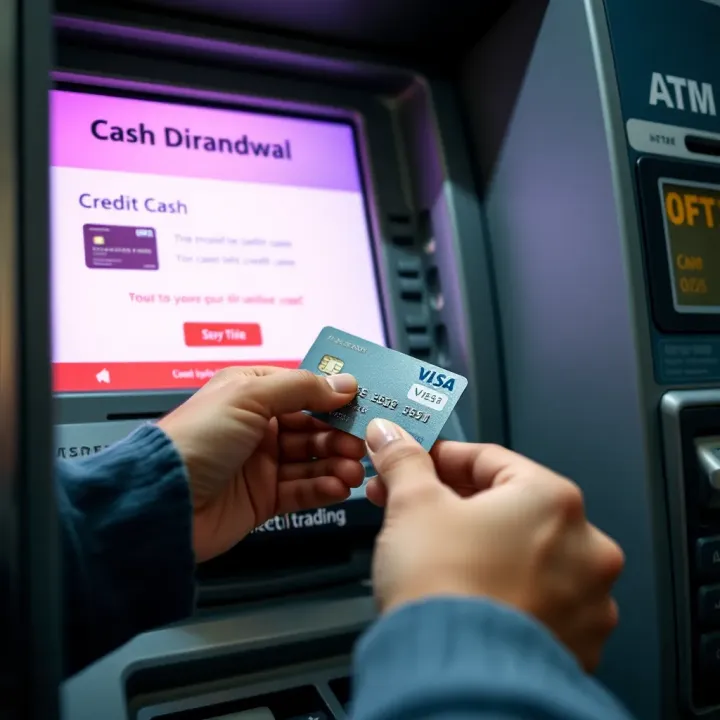
You can typically get a cash advance from an ATM using your credit card and a PIN, or through a bank teller. But unlike a regular purchase, the moment you withdraw, the clock starts ticking on interest—no grace periods here. Moreover, the interest rate for cash advances usually runs higher than your card's standard purchase APR.
Most credit cards tack on a cash advance fee, usually around 3% to 5% of the amount you withdraw, with a minimum charge of $10 or so. Say you pull out $500; you might have to pay $15 extra right off the bat. Then, interest starts accruing daily from that moment, compounding the cost.
Cash Limitations: Your card sets a cash advance limit, often much lower than your overall credit limit.
Higher APR: Expect to pay the cash advance APR, which can be in the high teens or even over 20%, depending on your card.
No Rewards: Unlike purchases, cash advances rarely earn points or cashback.
Heads up: Using cash advances regularly can signal financial strain to lenders, which might affect your creditworthiness if other debts pile up.
Imagine you withdraw $1,000 via cash advance with a 25% APR and a 5% fee. You'll pay a $50 fee immediately, and every month, interest accrues on this plus your withdrawn amount. Waiting even a month to pay off adds roughly $20 in interest—that's a $70 cost for $1,000 in cash within just a few weeks.
While cash advances provide quick access to cash, costs stack up fast. They're best reserved for emergency situations where no cheaper alternatives exist, such as personal loans or asking for short-term help from family or friends. Always review your credit card's terms closely to avoid surprise costs and keep your financial plans on track.
Knowing how cash advances work on your credit card matters if you find yourself needing quick cash but want to avoid surprises. Unlike regular purchases where you pay later with interest-free grace periods, cash advances involve borrowing cash against your credit limit, but with added costs and immediate interest. For professionals in trading or finance, understanding this helps manage liquidity carefully without influencing credit scores or increasing expensive debt.
A credit card cash advance lets you withdraw money up to a specific limit using your credit card. Think of it as a short-term loan from your credit card issuer, but it comes with its own set of fees and higher interest rates than typical purchases. For example, if you take $500 as a cash advance, you start accruing interest that day without any grace period. This service can be practical in emergencies but isn’t meant for regular use due to its cost.
The most common method is withdrawing cash at an ATM using your credit card. You'll need a PIN, which you can typically get from your card issuer if you don't have one. Just insert your card, select the cash advance option, and enter the amount up to your cash limit. The disadvantage here is that ATMs often charge their own fees on top of your card’s cash advance fees, so the cost adds up quickly. For example, withdrawing $300 from an ATM might cost you a $10 cash advance fee plus a 3% ATM surcharge.
Some banks allow you to get cash advances directly at their teller windows. You present your credit card and valid ID, and the bank processes the withdrawal as a cash advance. This can be helpful if you're withdrawing a larger amount or don't have easy ATM access. It’s worth noting that not all banks provide this service, especially if they’re not your card issuer’s bank. However, it might save the extra ATM fees you’d otherwise pay.

Certain credit card issuers provide checks linked to your card account—often called convenience checks—that you can write to yourself or others. Cashing these checks acts like a cash advance and similarly incurs fees and immediate interest. They're convenient when you want funds deposited directly into your checking account. Still, these are sometimes viewed as riskier since they can encourage more spending beyond your budget.
Remember, cash advances are handy tools, but their higher costs make them a last-resort option rather than a go-to source of cash. Professionals should weigh fees, interest, and impact on credit before deciding to withdraw money this way.
When you decide to withdraw cash from a credit card, understanding the related costs and limits can save you from unexpected financial strain. These factors directly affect how much money you actually get and what your repayment looks like later. Finance professionals and traders recognize that cash advances can be an expensive option, so breaking down these components provides clarity for informed decisions.
Most credit cards charge a cash advance fee every time you withdraw money. This fee usually falls between 3% and 5% of the amount withdrawn, with a minimum charge around $10. For instance, if you pull out $500 and the fee is 4%, you'll pay $20 just to get that cash on hand. Unlike regular purchases, this fee hits your account right away.
Additionally, some credit cards impose extra charges for ATM usage if you withdraw at a machine outside the issuing bank's network. These fees can stack up quickly, especially if you're frequently pulling cash on your card. For professionals monitoring how every dollar counts, these fees can chip away at your liquidity.
Cash advances come with higher interest rates compared to standard credit card purchases—often several points above your card’s usual APR. For example, a card with a 15% purchase APR might charge 24% for cash advances. What’s more, interest usually starts accruing immediately from the withdrawal day, unlike purchases that often have a grace period.
This means carrying a cash advance balance costs more over time. If you don't pay off the cash advance quickly, interest accumulates daily, inflating your repayment amount. Traders and analysts should weigh these costs against other borrowing options that might offer lower rates or delayed interest.
Every credit card sets a specific cash advance limit, which is usually a portion of your total credit limit. This limit can range from 20% to 50%, depending on the card issuer. For example, with a $10,000 credit limit, your cash advance limit might be only $2,000 to $5,000.
Exceeding this limit isn't usually allowed, or it could trigger penalties. Remember, withdrawing the maximum cash advance often leaves less credit for regular purchases. Professional investors juggling cash flow should consider these limits carefully when planning quick access to funds.
Bottom line: Cash advances add costs through fees and higher interest rates, and your card limits how much you can withdraw. Knowing these details upfront helps you avoid surprises and manage your finances effectively when tapping into your credit card for cash.
Understanding all these costs and limits is crucial when you’re thinking of using your credit card for cash withdrawal. It’s rarely a cheap or simple route, so weighing your options keeps you in control and ready to act smartly.
Withdrawing cash from a credit card might seem like a quick fix for tight cash flow, but it’s important to weigh the risks carefully. The convenience can come at a steep price, impacting your financial health beyond just the upfront fees. This section breaks down some of the key downsides to help you make a well-rounded decision.
Taking out a cash advance can affect your credit score in several ways. For starters, cash advances often count toward your credit utilization ratio—the portion of your available credit you’re using. Since cash advances usually come with their own limit, maxing out this portion can push your utilization higher, which may knock your score down. For example, if you have a $5,000 credit limit with a $1,000 cash advance limit and you withdraw $900, you’re using 90% of that segment, potentially dragging your score.
Additionally, cash advances won’t directly lower your overall debt-to-income ratio, but the extra balance makes your total debt load look heavier to lenders. If you don’t pay off the advance quickly, the persistent balance and interest can look like risky behavior. So the takeaway: use cash advances sparingly if you’re aiming to keep your score in good shape.
Cash advances often come with higher interest rates than regular purchases, and interest starts accruing immediately—no grace period. This means if you only pay the minimum monthly payment, the interest snowballs quickly.
Imagine pulling out $500 as a cash advance on a card with a 25% annual percentage rate (APR). Because interest kicks in right away, after just a couple of months, that $500 could balloon significantly if left unpaid. This accelerates debt accumulation and raises the risk of falling into a cycle that's hard to escape. Many users underestimate how fast these costs add up, which can worsen financial stress.
Beyond credit scores and debt, cash advances carry extra fees and limitations that matter. Often, there’s an immediate cash advance fee—commonly 3% to 5% of the amount withdrawn. If you withdraw $400, that's an extra $12 to $20 tacked on.
Also, many cards apply a separate cash advance limit, usually lower than your overall credit line. Overstepping this limit can deny the transaction, which can be frustrating when cash is needed urgently. Some cards also charge higher interest rates for cash advances compared to regular purchases.
Bottom line: cash advances can push your finances into risky territory with high fees, interest, and credit impacts. They might help in emergencies but aren’t a free source of cash. Exploring alternative options should be a priority before taking this route.
Understanding these risks helps traders, investors, and finance professionals decide when or whether to tap into cash advances. Being clear on the drawbacks lets you manage your credit card use wisely and avoid unexpected financial setbacks.
Relying on a credit card for cash withdrawals can be tempting, but it's not always the best move. The fees and high interest rates often turn what seems like a quick fix into an expensive burden. Exploring alternatives gives you options that might save you money and stress over time. Here’s a practical look at some better approaches you might consider.
Personal loans usually offer lower interest rates compared to credit card cash advances, making them a smarter option when you need cash upfront. For example, if you borrow $2,000 through a personal loan with a fixed rate around 10%, you’ll likely pay less in interest than using a cash advance charging 25% or more. Plus, personal loans come with fixed monthly payments and a clear payoff schedule, offering predictability. Lines of credit work similarly but are more flexible; you only borrow what you need, when you need it, and pay interest on that amount. Banks and credit unions often provide these options, so check the terms to see if they fit your cash needs better.
Peer-to-peer (P2P) apps like Venmo, Zelle, or Cash App can be handy alternatives for getting money without tapping your credit card’s cash advance feature. If you have trusted friends or family, you might borrow money through these platforms with little to no fees involved. Some services let you link a checking account directly to the platform for faster transfers, bypassing the need for cash advances. Keep in mind, though, P2P services are best for small amounts and short-term help. They usually don’t cover larger sums well unless there’s a formal repayment agreement in place.
Building an emergency fund might sound obvious, but it’s the safest cash source when unplanned expenses hit. Setting aside even a small amount each paycheck into a savings account helps avoid the trap of expensive cash withdrawals. Alternatively, revising your budget to free up cash can ease pressure without involving your credit. For instance, cutting back $50 to $100 on non-essential spending monthly can quickly add up to a decent financial cushion. The bottom line is having accessible savings beats taking on high-cost debt whenever possible.
Using credit cards to withdraw cash should be a last resort, not a go-to solution. These alternatives provide practical, cost-effective ways to access funds while protecting your finances and credit health.
Handling a credit card cash advance requires more than just knowing you can get money. Being smart about it means understanding the rules, cutting down unnecessary costs, and planning how to pay it back effectively.
You can't manage what you don't understand. Each credit card agreement spells out the details on cash advances—from fees and limit caps to interest rates and grace periods, or lack thereof. For example, some cards start charging interest on cash advances immediately, with no grace period. Others might set a lower limit for cash withdrawals compared to your total credit limit. It’s smart to check your card's specific terms before making any moves. Not doing so is like driving blind—risky and expensive.
Cash advances are notorious for high fees and steep interest. These fees typically include a transaction charge (around 3-5% of the amount withdrawn) and higher daily interest rates, often 20% or more. To keep these costs down, consider withdrawing only what you truly need and doing so fewer times. If your card offers promotional periods with lower rates for cash advances, that’s your window to act. Also, some credit cards partner with banks that don’t charge ATM fees for cash advances. A quick call to your card issuer could save you extra bucks.
Once you’ve got the cash, don’t let the balance fester. Cash advances don’t usually come with a grace period, meaning interest can pile up daily until repayment. Pay off the cash advance as promptly as possible, ideally before your next billing cycle. If you can, make payments larger than the minimum to reduce both principal and interest quicker. Setting up alerts or reminders can also keep you on track. Imagine having a $500 cash advance with a 24% annual rate—you’d be coughing up about $10 in interest every month if you stretched repayment over six months. Quick repayment prevents that runaway cost.
The bottom line is: knowing your terms, limiting how often and how much you withdraw, and paying it back fast can keep cash advances from blowing up your finances.
Using cash from your credit card wisely means you avoid surprises and excessive charges. Smart practices help keep your credit healthy and your wallet happy.
🤓 Learn how to multiply binary numbers step-by-step, understand why it's key in computing, and explore practical methods used in everyday digital tech and electronics.

Learn how to convert decimal numbers into binary with clear step-by-step guides 🧮, examples, and practical tips for everyday use in Kenya 🇰🇪.

Learn how to convert binary numbers to hexadecimal with clear steps, practical tips, common errors to avoid, and real examples 🧮💻

Discover how Kenyan banks tackle credit risk with smart assessments, regulatory support, and practical strategies to keep finances safe and stable 📊💼
Based on 6 reviews