

Trading Chart Patterns Explained for Kenyan Traders
📈 Learn how to spot and use trading chart patterns to predict market moves. Practical tips for Kenyan traders using local platforms and real examples included.
Edited By
Isabella Hughes
Chart patterns form the backbone of technical trading, offering traders and analysts a way to read market behavior visually. By recognizing recurring shapes on price charts, traders can estimate where prices may head next and plan trades with more confidence.
At its core, a chart pattern is a recognizable configuration of price movements that historically correlate with either continuations or reversals of market trends. Common examples include the Head and Shoulders, Double Top/Bottom, and Triangles. Each pattern carries distinct signals about buying and selling pressure.

Understanding these patterns helps traders identify potential entry and exit points, which can improve trade timing and risk management.
Unlike relying on fundamentals or purely numerical indicators, chart patterns encapsulate collective market psychology—fear, greed, and indecision—all reflected in price action. For instance, a well-formed ascending triangle often signals growing buying strength, while a double top can warn of a looming decline.
However, patterns don't always play out perfectly. False breakouts or incomplete formations can lead traders astray, so combining patterns with other analyses like volume trends or momentum indicators enhances reliability.
This guide dives into several key chart patterns, breaking down how to spot them and interpret their signals. We'll also provide practical tips for integrating this knowledge into your trading decisions. Plus, notable PDF resources will be suggested for detailed study and ready reference, so whether you're building your skillset or sharpening your expertise, you have strong support.
In the sections ahead, expect clear descriptions, examples from real market scenarios, and guidance on avoiding common pitfalls. The goal is not only to understand these patterns but to apply them effectively in day-to-day trading or investing.
With chart patterns as one tool in your trading toolkit, you'll better navigate price fluctuations and market dynamics. Let's get started.
Trading chart patterns serve as the backbone for many traders aiming to predict market movements. By visualizing price changes over time, these patterns help investors make sense of complex market behaviors in a digestible way. For example, spotting a classic "head and shoulders" pattern early can signal an upcoming trend reversal, giving traders the edge to enter or exit positions at smarter times. Understanding these patterns isn't just academic—it's practical, and it can sharpen your timing in real trading scenarios.
Chart patterns are essentially snapshots of price action consolidated into recognizable shapes on a graph. They transform raw price data into visual cues, showing how prices have climbed, dropped, or consolidated over specific periods. Imagine tracking Apple stock: a series of higher lows and higher highs might form an ascending triangle, signaling traders are pushing the price steadily upward. This visualization helps traders identify potential breakout points without getting lost in tick-by-tick number crunching.
Because these visual shapes aggregate price history, they make spotting momentum shifts simpler. Instead of juggling countless numbers, you get a quick read on market sentiment by observing familiar forms like double tops or flags, simplifying decision-making when speed matters.
Beyond just lines on a chart, patterns reflect the collective mentality of market participants—fear, greed, hesitation, and enthusiasm are all baked into price movements. For instance, a double bottom pattern often indicates that buyers are overcoming sellers at a particular price level, suggesting growing confidence. Likewise, a flag pattern could signal a brief pause where traders catch their breath before pushing the trend further.
Understanding that these patterns mirror human behavior provides a practical edge. Markets don't move randomly; they're guided by trader reactions to news, rumors, and psychology. Recognizing this helps you avoid blind trades and instead anticipate where the crowd might head next.
Chart patterns help forecast possible price moves by highlighting previous support and resistance behaviors that tend to repeat. Take the example of a descending triangle: if prices keep bouncing off a lower boundary and hit lower highs, it often points toward a bearish breakout. Traders who notice this early can prepare short positions or tighten stop-losses.
While no pattern guarantees success, these formations increase the odds of predicting where the price might head next. They provide a structured way to evaluate risk and potential reward, turning guesswork into informed probability calculations.
Chart patterns don't work in isolation—they complement other tools like moving averages, RSI, and volume indicators to confirm signals. For example, when a bullish flag pattern emerges alongside rising volume and an oversold RSI, the combined evidence boosts confidence in a likely upward move.
This integration strengthens a trader’s strategy: patterns point out key setups, while indicators provide validation. Together, they create a more rounded view of the market, helping traders avoid false signals and make more accurate entries and exits.

Mastering trading chart patterns is about reading the market’s story visually and psychologically, then using that insight alongside other data to make smarter decisions. It’s a skill that bridges analysis and action.
Chart patterns are the backbone of technical analysis, revealing hints about future price movements based on historical behavior. Recognizing common chart patterns lets traders anticipate potential shifts or continuations in the market trend, making these patterns indispensable for entry and exit decisions.
Head and Shoulders is one of the most widely recognized reversal patterns. It forms after an uptrend and signals a possible trend change to the downside. The pattern consists of three peaks: the left shoulder, the higher head, and the right shoulder. When the price breaks below the neckline—a line drawn connecting the lows between these peaks—it confirms the reversal. For example, if a stock trading at $50 rises to $60 (left shoulder), surges to $65 (head), then falls back to near $60 before rallying to $62 (right shoulder), a drop below $58 could signal a downturn. This pattern helps traders spot when bullish momentum is fading, allowing for timely exit or shorting opportunities.
Double Top and Double Bottom patterns signal trend reversals, too, but they show up differently. A double top occurs after an uptrend when the price hits a peak twice, failing to break higher. It's like the market testing resistance but falling short. Conversely, a double bottom forms after a downtrend when the price dips twice to a similar level and then bounces back, indicating strong support. Suppose a commodity price rallies to $100, retreats to $90, rebounds to nearly $100 again, and then drops below $90 — a double top is confirmed and likely hints at a reversal downward. Traders use these patterns to gauge where supply or demand might overwhelm current trends.
Flags and Pennants show brief pauses in price movement before the previous trend continues. A flag looks like a small rectangle slanting against the larger trend, resembling a flag on a pole, while a pennant looks like a small symmetrical triangle forming over a short period. Picture a stock advancing steadily, then pulling back slightly within parallel lines (flag), or tightening into a triangle shape (pennant), before breaking out in the original trend direction. These patterns, confirmed by volume spikes during breakouts, help traders ride the trend rather than anticipating reversals.
Triangles come in ascending, descending, and symmetrical forms, each offering clues about market sentiment:
Ascending Triangles have a flat top (resistance) and rising bottoms (higher lows), often signaling an imminent breakout upwards.
Descending Triangles feature a flat bottom (support) and descending tops (lower highs), suggesting potential breakdowns.
Symmetrical Triangles show converging trendlines with neither bulls nor bears in complete control, often leading to a breakout in either direction.
For example, if a stock consolidates between a flat $50 resistance and gradually rising lows, a breakout above $50 on high volume is a common bullish signal. These triangle patterns assist traders in spotting consolidation phases and positioning themselves for the upcoming move.
Understanding these common chart patterns arms you with practical tools for navigating market fluctuations. They give you a structured way to anticipate whether prices might keep moving in the same direction or change course.
By learning to identify and interpret reversal and continuation patterns, you can make more informed trading decisions, limit risks, and spot opportunities sooner.
Understanding how to read and apply chart patterns can boost your confidence in making market decisions. Chart patterns don't exist in isolation—they work best when combined with other tools and indicators that confirm their signals. Clear interpretation helps you spot potential price moves early, giving you an edge over traders relying on more basic methods.
Volume confirmation is essential when validating chart patterns. If a pattern forms but the trading volume stays flat or low, the signal may lack conviction. For example, when a breakout from a triangle pattern happens on high volume, it suggests strong buying or selling interest backing the move, making the signal more reliable.
On the other hand, a price breakout without increased volume often leads to a false signal. Volume acts as the market’s voice—ignoring its cues is like driving blind. So, always check if volume supports the pattern's direction before acting.
Support and resistance levels give context to chart patterns by marking price zones where the asset historically struggles to move beyond or falls back from. Suppose a double bottom pattern forms at a well-established support level around $50. The more times price has bounced here before, the stronger this support is perceived.
When a pattern signals a breakout above a resistance level, it can mean a trend continuation or reversal. You'll want to confirm this breakout isn’t a fluke by observing if the price stays above that resistance now turned support. Support and resistance thus anchor pattern signals.
Entry and exit points are pivotal for executing trades with chart patterns. Identifying the right moment to jump in can mean the difference between profit and loss. For instance, in a head and shoulders pattern, traders typically enter a short position when the price breaks below the neckline, signaling the trend reversal.
Exiting requires discipline, too. Setting targets based on pattern size—for example, measuring the height of a flagpole in a flag pattern—helps estimate potential price moves. This method avoids guessing wildly and lets you plan your trades objectively.
Setting stop-loss orders limits your risk by automatically closing a trade if the price moves against you. Placing a stop just outside the pattern boundaries or at recent highs/lows helps protect your capital without cutting you off prematurely.
For example, after entering on a breakout above a triangle pattern, you might place a stop-loss a bit below the breakout point. This way, should the breakout fail and price reverse abruptly, your losses are capped. Stops are a trader’s safety net, crucial in volatile markets where patterns can sometimes misfire.
Proper use of volume, support, resistance, and careful trade management turns chart pattern signals from vague hints into actionable trading decisions.
By combining these elements thoughtfully, your chart pattern analysis can become a dependable part of your trading toolkit.
PDF resources serve as handy guides for traders looking to deepen their knowledge of chart patterns. These documents distill complex concepts into clear formats you can review anytime, whether at home or on the go. Unlike constantly updating websites or video tutorials, PDF guides offer a stable reference point that you can annotate, bookmark, or print out for quick access during your trading sessions.
PDFs are portable by nature, allowing you to store them on your phone, tablet, or laptop without feeling bogged down by bulky books or endless browser tabs. For example, if you’re trading during your commute or between meetings, having a compact PDF featuring chart patterns and key trading tips is a real time-saver. You avoid the distraction of a full website while still keeping vital info within reach.
Trading concepts in PDF guides usually follow a logical flow, starting with foundational ideas before moving into advanced patterns or strategies. This sequencing helps new and experienced traders alike to build skills step-by-step without jumping around. Structured layouts, complete with charts, examples, and summaries, create a clear, consistent learning path that can make it easier to grasp and remember pattern characteristics.
Many reputable brokerages like TD Ameritrade, E*TRADE, and Interactive Brokers offer educational materials to clients, including PDFs focused on chart patterns. These resources tend to be accurate and trustworthy since they’re produced by professional analysts or educators connected to the brokerage's research teams. Access often requires account registration, but the investment in signing up pays off with high-quality PDFs tailored for practical trading.
Websites like Investopedia, BabyPips, and StockCharts also provide free or paid downloadable PDFs that help traders understand chart patterns. These platforms often update their guides to reflect market changes or new analysis techniques. When choosing PDFs, look for those with clear author credentials, recent publication dates, and solid reader reviews to ensure the material matches current trading realities.
Having reliable PDF resources at your fingertips can sharply reduce your learning curve by providing clear, focused insight into chart patterns without sifting through endless web content.
Using PDFs as part of your study routine enhances retention and supplies a ready-made toolkit you can pull from anytime you analyze charts or plan trades.
Chart patterns provide valuable signals, but they aren't foolproof. Understanding their limitations protects traders from costly mistakes and helps set realistic expectations. Patterns can fail or give false signals, especially when market conditions are tricky. Recognizing these factors makes your trading strategy more reliable.
Common reasons for inaccuracies: Chart patterns sometimes mislead because of human error in identifying them or due to insufficient confirmation. For example, mistaking a short-term price fluctuation for a legitimate breakout can trigger premature trades. Traders might spot a "head and shoulders" pattern that looks promising but lacks volume support, causing the expected reversal to fizzle out. Over-reliance on a pattern without additional checks often leads to these inaccuracies.
Impact of market volatility: Sudden market swings can disrupt chart patterns. Volatility increases noise, making it harder to trust classic formations. For instance, during earnings announcements or geopolitical events, price actions might spike erratically, invalidating well-formed patterns. In these cases, a classic double top may fail to predict a reversal as markets react unpredictably beyond technical setups.
Using indicators alongside patterns: Pairing chart patterns with indicators like the Relative Strength Index (RSI) or Moving Average Convergence Divergence (MACD) can validate signals. If a bullish flag pattern forms, but the RSI is showing overbought conditions, it suggests caution before entering a long trade. Indicators can filter out false positives, improving the overall quality of your trades.
Considering broader market context: Chart patterns don’t act in isolation. Economic releases, sector trends, or overall market sentiment heavily influence price moves. For example, a breakout in a technology stock’s ascending triangle pattern might carry more weight when the Nasdaq is trending up strongly. Ignoring the bigger picture can cause you to misread patterns or take trades against primary market momentum.
The bottom line is that chart patterns need to be one piece of a bigger puzzle, supported by volume analysis, indicators, and market context to make smart, well-timed trading decisions.
📈 Learn how to spot and use trading chart patterns to predict market moves. Practical tips for Kenyan traders using local platforms and real examples included.
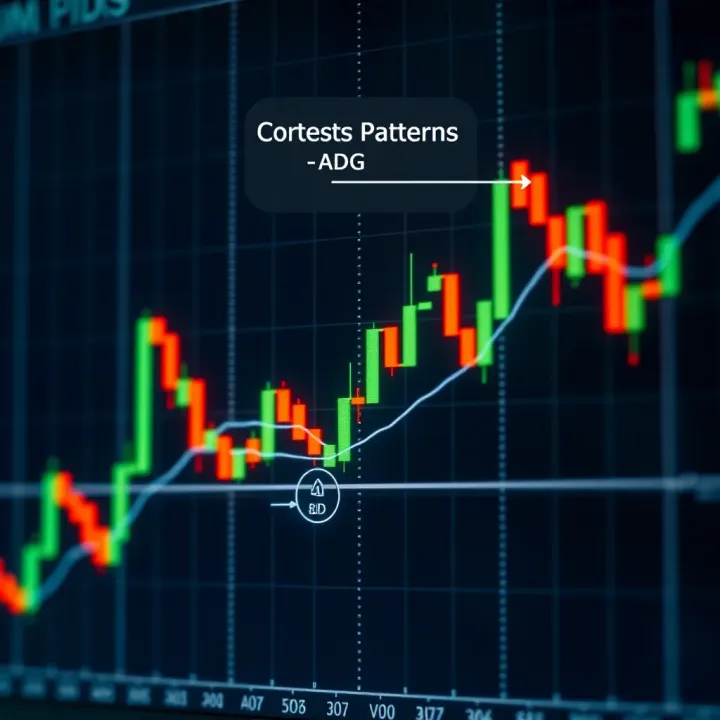
Explore key chart patterns in trading and investing 📈 Learn to spot, interpret, and apply them with free PDF guides to sharpen your skills! 📊

Master essential candlestick patterns for smarter trading decisions 📈. Explore practical tips and free PDFs to boost your chart analysis skills in Kenya and beyond.

📈 Learn to spot and interpret key chart patterns for smarter trading. Access trusted PDF guides tailored for Kenya's market to sharpen your strategy today.
Based on 7 reviews