
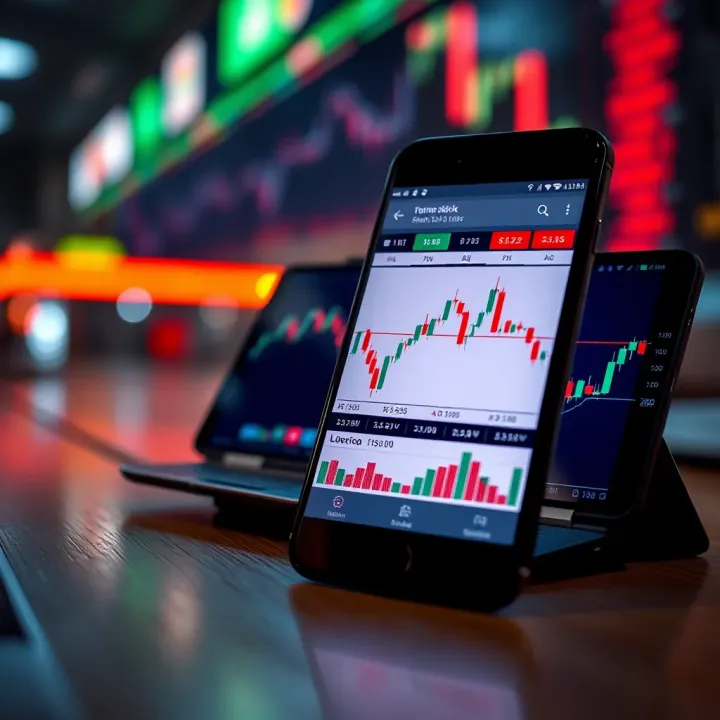
A Practical Guide to Forex Trading Apps
Explore top forex trading apps in Kenya 📱. Learn their features, security tips, and how to pick the right tools for smarter market moves 📊💼.
Edited By
Elizabeth Montague
Online forex trading has become increasingly popular in Kenya, with many people seeking ways to grow their savings beyond the traditional bank fixed deposit or real estate. Unlike stock trading, forex trading revolves around currency pairs, such as USD/KES, where traders buy one currency and sell another simultaneously. This can happen anywhere, anytime, as markets run 24 hours on weekdays allowing flexibility for anyone with internet access.
Starting out may seem complex, but with the right approach, you can navigate the process effectively. The key is to understand the basics of forex markets, how orders are executed, and the role of leverage which amplifies both profits and losses. For example, a leverage of 1:100 means you control KSh 100,000 while only needing KSh 1,000 as margin, but it also means risks multiply if prices move against you.
Choosing the right trading platform is vital. Kenyan traders often opt for globally recognised brokers like IG, FXTM, or HotForex, all regulated by international authorities as well as local guidelines from the Capital Markets Authority (CMA). Make sure the broker offers reliable customer support, M-Pesa funding options, and clear pricing without hidden commissions.
Always treat forex trading like running a business. It requires discipline, proper planning, and ongoing learning—there’s no shortcut to consistent profits.
Before risking your hard-earned cash, practise with a demo account to get a feel for the platform and test strategies without financial loss. Risk management should be part of your strategy from day one; use stop-loss orders to limit potential losses and avoid risking more than 1-2% of your trading capital per trade.
Finally, remember the legal framework in Kenya requires forex brokers to be licensed or operate under strict CMA oversight. Trading with unregulated entities can expose you to scams. Always check broker credentials on the CMA registry.
With these basics in place, you’ll be better equipped to explore the forex market confidently and responsibly.
Getting a clear picture of forex trading and why it's gaining traction in Kenya sets the foundation for anyone considering this market. This understanding helps traders know what they’re getting into, what makes forex different from other investments, and what practical benefits to expect.
Forex trading involves buying and selling foreign currencies with the aim of profiting from exchange rate fluctuations. Unlike trading stocks or bonds, forex is all about currencies — for example, buying US dollars with Kenyan shillings and selling them later if the dollar strengthens. This market runs 24 hours a day, allowing flexibility for traders who want to operate outside typical work hours.
Currencies always trade in pairs because you’re exchanging one currency for another. For instance, the USD/KES pair shows how many Kenyan shillings are needed to buy one US dollar. If you believe the shilling will weaken against the dollar, you might buy USD/KES expecting to sell back at a profit when rates change. Understanding these pairs is critical since each follows different patterns influenced by economic data, political events, or even market sentiment.
The growing interest among Kenyans in forex comes partly because it offers an accessible way into global markets. Unlike traditional investments that may require large capital or lengthy processes, forex trading can start with relatively small amounts, sometimes just a few thousand shillings. This makes it ideal for individuals in urban centres like Nairobi or Mombasa looking to supplement their income without starting a full business.
Forex’s liquidity is another draw. Since it’s the largest financial market worldwide, you can buy or sell currency pairs almost instantly without waiting for buyers or sellers. This quick turnaround appeals to those who want faster access to potential profits compared to more sluggish stock markets.
When compared with other options such as Nairobi Securities Exchange shares or real estate, forex trading has some distinct features. Shares often require deeper research into company performance and dividends, while real estate demands larger capital and longer-term commitments. Forex trading offers more flexibility, and you can easily adjust your position daily or even hourly. However, it carries higher risks, so it’s not suitable for everyone.
Understanding the core of forex trading and why it appeals to many Kenyans helps traders approach the market with a realistic mindset and prepare for its unique challenges and opportunities.
By focusing on currency pairs, quick trades, and the ability to start small, forex trading provides practical opportunities that many other investments don’t. That said, getting this basic foundation right is key before moving on to more complex strategies or brokers.
Starting your journey in online forex trading requires a solid foundation, especially in the Kenyan context where local payment methods and regulatory considerations come into play. Setting up your trading account and having the right tools are key steps that will determine your ease and success in the market.
There are generally three types of forex trading accounts you will encounter: standard, mini, and micro accounts. Standard accounts usually require higher initial deposits but offer lower spreads and more leverage options, suited for those with some capital and experience. Mini accounts allow trading with smaller amounts, often catering to beginners who want to test the waters without risking much. Lastly, micro accounts provide the smallest trade size, ideal for those starting with minimal funds or learning how the market works.
Choosing the right account depends on your budget and risk appetite. For example, a trader in Nairobi might open a mini account with KS0,000 to gauge market behaviour before moving to larger trades.
Registering your account typically starts with filling out personal information on your chosen broker's website or platform. Verification involves uploading identification documents such as your national ID or passport, proof of residence (a utility bill is common), and sometimes proof of income. This process protects your funds and helps the broker comply with Kenyan regulations. Expect the verification to take a few hours to a couple of days depending on the broker.
The choice of platform impacts your trading experience significantly. MetaTrader 4 (MT4) and MetaTrader 5 (MT5) are widely used platforms offering charting tools, technical indicators, and automated trading features. Other platforms like cTrader provide additional flexibility for Kenyan traders looking for advanced order types. Many brokers also offer mobile apps compatible with Android and iOS, allowing you to trade on the go. For instance, Safaricom's widespread smartphone usage means most Kenyan traders can access these apps easily.
Stable internet and reliable devices are crucial since forex trading requires near real-time data. A broadband connection or a strong 4G mobile network will ensure your trades are executed promptly. Many traders prefer laptops or desktops for detailed analysis but tablets and smartphones are fine for monitoring trades during the day. Make sure your device is updated and protected against malware to avoid disruptions.
Starting correctly with your account setup and tools can save you from headaches later in the volatile forex market, especially given Kenya’s unique payment and regulatory landscape.
By understanding these essentials, you ensure a smoother entry into forex trading that aligns with both your financial goals and the local market environment.

Choosing a trustworthy forex broker is one of the most critical steps for Kenyan traders entering the forex market. A reliable broker acts as your gateway to the market and can greatly influence your trading experience, costs, and security. Poor choice can lead to unnecessary expenses, delays in accessing funds, or even falling victim to scams. Therefore, understanding what to look for helps you protect your capital and trade comfortably.
One of the first things to check is whether the broker is properly regulated. In Kenya, the Capital Markets Authority (CMA) oversees forex trading activities. Brokers licensed by the CMA or reputable international bodies such as the Financial Conduct Authority (FCA) or Australian Securities and Investments Commission (ASIC) provide an extra layer of security. Regulation ensures the broker meets minimum financial standards and operates transparently. Without this, your funds and personal information might be at risk.
For instance, a broker operating without CMA approval or international licences might vanish after receiving deposits, leaving traders stranded. Hence, make it a point to verify licences directly on regulator websites or via credible reviews before opening an account.
Traders should pay close attention to fees charged by brokers. These include spreads, commissions, and rollover costs. The spread — the difference between buying and selling price — affects your break-even point for trades. Lower spreads generally mean less cost per trade, especially for high-frequency traders.
Take brokers like IG or XM, which often offer competitive spreads starting from 0.6 pips. On the flip side, some brokers target newbie traders but add hidden fees, raising overall trading costs. Understanding these fees beforehand can save you from surprises and help choose brokers that align with your trading style and budget.
Ease of depositing and withdrawing funds is crucial for smooth trading. Kenyan traders benefit greatly from brokers offering local payment methods like M-Pesa or bank transfers with reasonable processing times and low charges.
For example, several brokers now accept M-Pesa payments directly, allowing instant deposits without currency conversion hassle. Withdrawal processes should be clear, fast, and reliable; a broker that takes weeks to process withdrawal requests signals red flags. Choose brokers with transparent fund policies and convenient payment options that suit your daily banking habits.
Many international forex brokers welcome Kenyan clients, but their services differ in focus, fees, and support. Some well-known brokers like XM, HotForex, and Exness have tailored accounts for African traders offering low minimum deposits and multi-currency accounts.
These brokers tend to provide local customer support, educational resources in English, and trading conditions suited for both beginners and professionals. Make sure the broker you pick offers accounts that accommodate the Kenyan shilling or has good currency conversion rates to avoid losing funds during transactions.
Brokers with M-Pesa integration stand out because they simplify funding your trading accounts. Since M-Pesa dominates mobile payments in Kenya, having it as a deposit and withdrawal option reduces the friction of forex trading.
Besides M-Pesa, some brokers also accept payments via local banks and credit/debit cards, enabling flexibility. However, beware of brokers that impose exorbitant withdrawal fees or delay payments. Always review user feedback about payment experiences before committing your money.
Selecting the right broker goes beyond just fees and offers – it’s about security, accessibility, and transparency that give you confidence to trade without worrying about your funds or unfair practices.
Trading forex online involves significant risk, so managing that risk while using effective strategies can protect your capital and improve your chances of success. Understanding the specific risks and having a clear plan will help you avoid common mistakes and trade more confidently. This section explains key risks and practical ways to handle them, plus trading approaches suitable for beginners.
Forex markets move quickly, making volatility a key risk for traders. Currency prices can swing sharply within minutes due to economic data, geopolitical events, or central bank decisions. For example, if the Kenyan shilling suddenly weakens against the US dollar after an unexpected announcement, price can jump or drop rapidly. Volatility is a double-edged sword: it offers profit chances but also exposes you to steep losses.
Leverage magnifies both gains and losses. Many brokers offer leverage ratios like 1:100, meaning you control KS00,000 with just KS,000. But if the market moves against you, losses can exceed your initial deposit quickly. High leverage without control can wipe out accounts fast, so it’s vital to understand how much you are risking per trade.
Starting traders often fall into traps like chasing losses or overtrading. For instance, after a losing trade, some rush to recover losses by increasing trade size recklessly, which compounds risk. Others jump into too many trades at once, spreading themselves thin without clear focus.
Another pitfall is poor discipline — ignoring stop-loss orders or failing to stick to a trading plan results in unnecessary losses. Emotional trading, driven by fear or greed, usually leads to bad decisions. Recognising these tendencies early helps you develop better habits.
Stop-loss and take-profit levels automatically close your trade once price reaches certain points. Placing a stop-loss limits the amount you can lose if the market moves against you. For example, if you buy EUR/USD at 1.1000, setting a stop-loss at 1.0950 caps losses to 50 pips.
Take-profit orders lock in gains by closing the position when your target price is hit. Using both helps remove emotional trading, ensuring you don’t hold losing trades too long or exit profitable trades too soon.
Don’t put all your eggs in one basket. Diversifying trades across different currency pairs lessens exposure to any single market event. For example, combining trades in USD/JPY and GBP/USD spreads risk since these pairs react to different economic drivers.
Controlling leverage is equally important. Instead of maxing out a 1:100 ratio, use lower leverage like 1:10 to reduce danger. This approach helps you survive losing streaks without wiping out your capital.
Scalping involves making many quick trades lasting minutes, aiming for small profits repeatedly. This requires full focus and fast decision-making, suitable for those who can watch the charts constantly.
Day trading holds positions for hours but closes all trades before the market closes to avoid overnight risks. Swing trading lasts days to weeks, capturing larger price moves by analysing broader trends. Beginners often find swing and day trading more manageable than scalping, offering a balance between activity and patience.
Technical analysis studies price charts and patterns to predict future moves. For example, spotting a support level where price often bounces can guide entry points. Popular tools include moving averages and RSI (Relative Strength Index).
Fundamental analysis looks at economic indicators like inflation, interest rates, or political events. A Kenyan trader might watch CBK rate decision announcements or US non-farm payroll reports, as these influence currency strength. Combining both analyses often yields better trading decisions.
Managing risk isn't about avoiding danger altogether but trading smartly to protect your capital and grow steadily. Having a clear strategy helps you keep emotions in check and navigate forex markets confidently.
Understanding the legal landscape is crucial for anyone trading forex online in Kenya. Knowing the specific rules helps you avoid pitfalls, protect your investments, and trade with confidence. This section outlines Kenya's regulatory framework and tax duties, which have practical impacts on how you operate in the forex market.
The Capital Markets Authority (CMA) is the main regulator overseeing forex trading activities in Kenya. Its role is to ensure that brokers and trading platforms comply with set standards, including transparency and customer protection. For example, CMA licenses reputable brokers, making it safer for Kenyan traders to engage with them instead of risking unregulated foreign platforms.
CMA’s oversight includes monitoring brokers’ financial health and enforcing rules against fraud. This gives you, as a trader, a layer of security knowing that the broker must operate under Kenyan law. Before opening an account, it’s wise to verify if a broker is CMA-approved. Unlicensed brokers may offer tempting deals, but they come with higher risks of scams or unfair practices.
Regulation affects you directly by providing clear channels for dispute resolution and consumer rights. For instance, if a CMA-regulated broker acts unfairly or fails to pay out your profits, you can file a complaint to the authority. This official backing is usually not available with offshore or unregistered brokers.
Moreover, regulated brokers are required to segregate client funds, meaning your money is kept separate from the broker’s operational funds. This arrangement protects your deposits if the broker collapses. Regulation also imposes limits on leverage, helping prevent excessive risks that can wipe out your capital fast.
Forex trading profits are considered taxable income under Kenyan law. You must declare any gains to the Kenya Revenue Authority (KRA) as part of your annual income tax return. Failure to report can attract penalties or audits.
Practically, since forex trading can involve many small transactions, you need to summarise your net profits annually. KRA does not yet have a separate category for forex income, so it often gets reported under business or other income.
Keeping accurate records is essential not just for tax compliance but also for managing your trading performance. Maintain detailed logs of every trade, including dates, currency pairs, trade sizes, entry and exit prices, and outcomes. Receipts of deposits and withdrawals from your broker should also be saved.
Good record keeping simplifies tax filing and protects you in case of KRA queries. Use spreadsheets or specialised trading journal software to track your trades. Some Kenyan traders have found that combining this with clear bank statements and M-Pesa transaction records helps clarify tax obligations.
Staying on top of legal and tax requirements may seem like extra work, but it builds a solid foundation for sustainable trading. It helps you trade responsibly, avoid costly errors, and focus on growing your investments with peace of mind.
Explore top forex trading apps in Kenya 📱. Learn their features, security tips, and how to pick the right tools for smarter market moves 📊💼.
Learn forex trading in Kenya 🇰🇪 with our practical guide covering market basics, strategies, risk management, choosing brokers, and trading tools 📈

📈 Explore top Forex trading classes in Kenya! Learn essential skills, find the right course, and gain confidence before you trade. Start smart today!

Discover how forex trading bots automate currency trades 🤖, their benefits and risks, plus tips for Kenyan traders to use them effectively.
Based on 12 reviews